
+86-400-808-1508 zhaoxuemei1@huxishiye.com
Language
Please Choose Your Language

Views: 0 Author: Site Editor Publish Time: 2026-08-06 Origin: Site


Precise mechanical agitation directly correlates with cell culture viability. Suboptimal mixing compromises Oxygen Transfer Rates (OTR), limiting overall yield and stunting cell growth. Deploying the wrong agitation equipment introduces severe operational risks. You might subject fragile mammalian cell lines to lethal shear stress or face mechanical failures and cross-contamination within controlled incubator environments. You need a rigorous evaluation framework to match specific workflows with the right equipment. Whether you run suspension, adherent, or high-throughput cultures, selecting the appropriate laboratory shaker is critical. You must evaluate technical specifications, scalability, environmental compatibility, and regulatory compliance. This guide provides the technical foundation to optimize your cell culture workflows through precise agitation control, ensuring you select the exact hardware required for your specific biological processes.
Application Matching: The choice between orbital, roller, and microplate agitation dictates aeration efficiency and shear stress levels, directly impacting cell line viability.
Environmental Resilience: Equipment must be evaluated for its ability to withstand high-humidity, CO2-enriched incubator environments without generating excessive localized heat or succumbing to corrosion.
Orbit and Speed Dynamics: Selecting the correct orbit diameter (throw) relative to vessel size and RPM is critical for optimizing gas exchange while preventing cell rupture.
Regulatory & Data Integration: Modern bioprocesses require shakers that support GMP validation (IQ/OQ/PQ) and digital integration (SCADA/LIMS) for continuous parameter tracking.
Risk Mitigation: Long-term success requires assessing motor reliability (magnetic vs. belt drives), contamination control features, and automated alarm systems to prevent catastrophic sample loss.
Agitation directly influences the volumetric mass transfer coefficient (kLa). Maintaining sufficient dissolved oxygen is the primary success metric for high-density cultures. Proper mixing ensures oxygen moves from the headspace into the liquid media efficiently. Without adequate OTR, cellular metabolism shifts to anaerobic pathways. This produces lactic acid and rapidly drops the culture pH, which can destroy a batch overnight. You must match your agitation speed to the oxygen demands of your specific cell line. For high-density microbial fermentation, aggressive mixing is required to force oxygen into the dense broth. For mammalian cells, the approach requires a delicate balance to maintain dissolved oxygen without tearing the cells apart.
Engineers calculate kLa to determine the exact oxygen transfer capabilities of a given setup. This calculation involves the power input per unit volume and the superficial gas velocity. When you scale up from a 250mL flask to a 2L flask, the surface-area-to-volume ratio changes drastically. You cannot simply use the same RPM. You must adjust the speed and orbit to maintain the same kLa, ensuring the cells experience the same oxygen availability regardless of the vessel size.
You must find the threshold between necessary mixing and destructive hydrodynamic forces. Sensitive mammalian cells like CHO and HEK-293 require gentle handling. Insect cells (Sf9) and human induced pluripotent stem cells (hiPSC) are equally vulnerable. Excessive turbulence ruptures cell membranes and induces apoptosis. Equipment selection must prioritize smooth motion profiles to keep these fragile lines intact. The fluid dynamics inside the flask create shear forces along the walls and at the gas-liquid interface. If the agitation is too aggressive, the cells are crushed against the glass or torn apart by the fluid eddies.
To mitigate shear stress, operators often utilize larger orbit diameters combined with lower rotational speeds. This creates a gentle, sweeping wave inside the flask rather than a violent vortex. Additionally, the choice of media supplements, such as Pluronic F-68, can help protect cells from shear forces at the gas-liquid interface, but mechanical optimization remains the primary defense against cell rupture.
Equipment operating inside CO2 incubators faces harsh conditions. Your unit must maintain thermal uniformity within +/- 0.1°C. It also needs to resist corrosion from high humidity and carbonic acid. Continuous operation demands sealed electronics and specialized coatings. If a unit generates excess motor heat, it will disrupt the incubator's carefully controlled microclimate. Standard benchtop units will fail rapidly in these environments. The moisture penetrates the housing, short-circuiting the control boards and rusting the drive mechanisms.
Incubator-rated units utilize potted electronics, where the circuit boards are encased in epoxy to block moisture. The structural components are typically fabricated from 316L stainless steel or treated with heavy-duty epoxy coatings. Furthermore, the motors must be highly efficient to prevent heat dissipation into the chamber. Even a 1°C increase caused by motor heat can trigger the incubator's cooling system or, worse, damage temperature-sensitive cultures.
Liquid fill volumes typically range from 10% to 20% of the nominal vessel volume. This ratio maximizes the gas-liquid interface. The choice between baffled and non-baffled Erlenmeyer flasks drastically alters fluid dynamics. Baffled flasks increase turbulence and aeration for robust microbial cultures. Non-baffled flasks provide the gentle, sweeping motion required for sensitive mammalian suspensions. When you fill a flask beyond 20%, the fluid depth increases, and the surface area relative to the volume decreases. This severely limits oxygen transfer, regardless of how fast you agitate the vessel.
The shape of the vessel bottom also plays a role. Fernbach flasks have a wider base than standard Erlenmeyer flasks, providing a larger surface area for gas exchange at the same volume. Ultra-yield flasks feature specialized geometries designed to maximize aeration. Understanding how your specific vessel interacts with the agitation motion is critical for optimizing the culture environment.
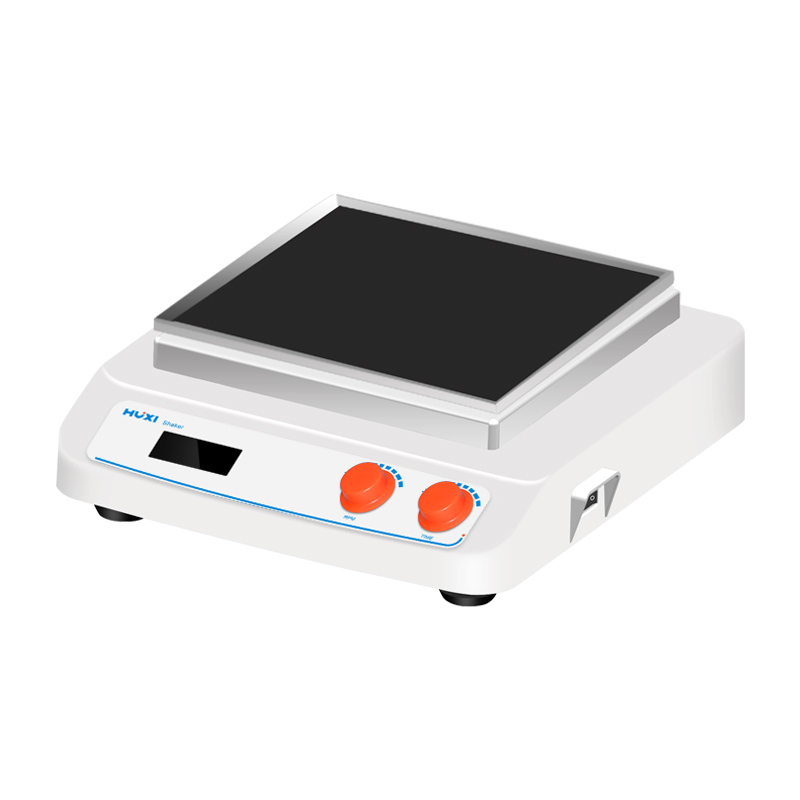
An orbital shaker uses circular horizontal motion to maintain uniform suspension. This continuous sweeping action aerates the media without introducing harsh baffles. It works exceptionally well with Erlenmeyer, Fernbach, and ultra-yield flasks. The horizontal circular motion creates a vortex that draws liquid up the sides of the flask, increasing the surface area exposed to the headspace gas. This is the most common method for cultivating suspension cell lines in research and pilot-scale production.
Microbial cultures thrive on high-RPM and small-orbit configurations. Mammalian suspension cultures require low-RPM and large-orbit setups to prevent shear stress. However, extreme scaling presents limitations. Incorrect speed-to-orbit ratios cause fluid splashing and wet the vessel filters, leading to contamination or gas exchange blockage. At a certain volume, typically beyond 3L to 5L flasks, the efficiency of surface aeration drops, and you must transition from flasks to stirred-tank bioreactors with active sparging.
A roller shaker maximizes surface area for anchorage-dependent cells. It slowly rotates cylindrical roller bottles along their horizontal axis. This motion continuously bathes the cells in media. It optimizes nutrient uptake, waste removal, and gas exchange without turbulent forces. The cells attach to the inner wall of the bottle, and as it rotates, they are alternately submerged in the nutrient-rich media and exposed to the oxygen-rich headspace.
You need ultra-slow rotational speeds, typically between 0.1 and 10 RPM. Smooth start and stop ramps ensure secure cell attachment. These units offer excellent vertical stacking efficiency. You can maximize your footprint-to-yield ratio within specialized reach-in incubators. Roller systems are highly modular. You can start with a small benchtop unit for a few bottles and scale up to massive, floor-standing racks that hold hundreds of bottles for vaccine production or large-scale cell expansion.
Deep-well plates and 96/384-well formats require specialized agitation. Standard orbital diameters fail to overcome surface tension in these tiny wells. A microplate shaker solves this by using ultra-small orbits ranging from 1.5mm to 3mm. If you attempt to use a standard 25mm orbit on a 96-well plate, the liquid will simply slosh back and forth without actually mixing, or worse, it will spill over the edges and cross-contaminate adjacent wells.
These units operate at high speeds, often reaching up to 3000 RPM. This creates vigorous micro-vortices for thorough mixing without cross-well contamination. They also feature mechanical compatibility with robotic arms, automated liquid handlers, and plate stackers. The tight orbit and high speed generate the necessary kinetic energy to break the surface tension and ensure homogeneous mixing of reagents, cells, and media within the microscopic confines of the wells.
Rocking platforms provide a 2D seesaw motion. Waving platforms offer a 3D undulating, wave-like movement. Both create ultra-low shear environments. They are ideal for single-use bioreactor bags and fragile stem cell expansion. You will also use them frequently for washing steps in downstream purification workflows. The motion is incredibly gentle, relying on gravity to shift the liquid back and forth, which provides sufficient mixing and aeration for highly sensitive applications without generating any mechanical shear.
In single-use bioreactor applications, the rocking motion creates a wave inside the inflated plastic bag. This wave constantly renews the gas-liquid interface, providing excellent oxygen transfer for mammalian cell cultures. The angle of the rock and the speed of the motion can be precisely controlled to optimize the wave dynamics for different culture volumes and cell types.
Selecting the correct orbit size is a critical engineering decision. The mathematical relationship between orbit diameter, vessel size, and rotational speed determines fluid movement. You must calculate the Froude number to ensure in-phase liquid motion. If the liquid moves out of phase with the platform, it crashes against the vessel walls, causing massive shear stress and poor aeration.
Orbit Diameter | Primary Application | Vessel Compatibility |
|---|---|---|
19mm (3/4 inch) | General use and robust microbial cultures. | Small flasks and tubes (up to 250mL). |
25mm (1 inch) | Standard mammalian suspension workflows. | Medium Erlenmeyer flasks (250mL - 1L). |
50mm (2 inches) | Highly shear-sensitive cultures and large volumes. | Large Fernbach flasks (2L - 5L). |
3mm (1/8 inch) | High-throughput screening. | 96 and 384 well microplates. |
When working with large 5L flasks, a 50mm orbit is almost mandatory. A smaller orbit would require excessively high RPMs to achieve the necessary fluid velocity at the outer edges of the wide flask base. The larger orbit allows for a slower, gentler rotation that still moves the large volume of liquid effectively, maintaining the required kLa without destroying the cells.
Traditional brushless DC motors provide reliable power but can generate heat. Advanced magnetic drive mechanisms eliminate belt wear and minimize particulate generation. More importantly, they dramatically reduce heat transfer to the incubator chamber. Low-heat-emission units prevent localized temperature spikes. This thermal protection is vital for maintaining cell viability inside climate-controlled environments. A magnetic drive uses a series of electromagnets to rotate the platform without any direct mechanical linkage, which means zero friction and zero belt dust.
In a cleanroom environment, particulate generation is a major concern. Belt-driven units shed microscopic rubber particles as the belt wears down over time. Magnetic drives eliminate this issue entirely, making them the preferred choice for cGMP manufacturing facilities. Furthermore, the lack of moving parts in the drive mechanism significantly extends the operational lifespan of the equipment and reduces maintenance requirements.
Dedicated clamp arrangements offer maximum structural stability for high-speed runs. Universal spring-tension bar platforms provide flexibility for mixed-vessel workflows. Adhesive silicone mats offer unmatched convenience for lower speeds. When you are running a 2L flask at 250 RPM, you must use a dedicated metal clamp bolted directly to the platform. An adhesive mat will fail under those forces, sending the flask flying across the incubator.
Handling heavy, unbalanced loads requires robust engineering. Single-eccentric drives work for light loads. Dual and triple-eccentric drive mechanisms are necessary for heavy capacities. They prevent mechanical vibration and stalling during continuous operation. A triple-eccentric drive uses three separate shafts to support the platform, ensuring perfectly uniform motion across the entire surface, even if you place a heavy 5L flask on one corner and leave the rest of the platform empty.
Productivity bottlenecks often trigger the need for larger equipment. Stepping up from benchtop research to pilot-scale seed train development requires stackable incubator models. Stacking three units vertically saves floor space but introduces structural challenges. You must evaluate active vibration dampening and counterbalancing systems. These features prevent structural resonance and protect your samples. If three heavy units are all agitating at different frequencies, they can create harmonic resonance that literally shakes the entire stack apart.
Advanced stackable units feature dynamic counterbalancing. As the load on the platform changes, internal weights shift to offset the mass, ensuring the unit remains perfectly stable. This allows you to run high-speed microbial cultures on the top unit and low-speed mammalian cultures on the bottom unit without any cross-interference or vibration transfer.
Clinical manufacturing environments demand strict GMP/GLP readiness. You need comprehensive validation documentation, including Installation, Operational, and Performance Qualifications. Data integrity is equally critical. Look for secure digital data logging and user access controls that comply with 21 CFR Part 11. Compatibility with SCADA or LIMS networks via OPC UA or Modbus protocols ensures seamless integration. You must be able to prove to regulatory bodies that the equipment operated exactly as programmed for the entire duration of the batch.
Modern units feature onboard touchscreens with multi-level user access. Operators can log in with unique credentials, and every parameter change, door opening, or alarm event is recorded in an unalterable audit trail. This data can be exported via USB or transmitted directly to the facility's central monitoring system, eliminating the need for manual paper logs and reducing the risk of human error in batch records.
High relative humidity and carbonic acid exposure degrade standard metals. You must use corrosion-resistant materials like SUS 304/316 stainless steel or copper-alloy chambers. Sanitization protocols are also critical. Ensure your equipment is compatible with Vaporized Hydrogen Peroxide (VHP) decontamination. Integrated automated UV-C sterilization cycles provide an additional layer of protection. If the internal components cannot withstand VHP, the sterilization process will destroy the electronics and seals.
Copper-alloy components are increasingly popular due to their natural antimicrobial properties. While stainless steel is easy to clean, copper actively kills bacteria and fungi on contact, providing continuous passive contamination control inside the humid incubator environment. Regardless of the material, the design must feature coved corners and smooth welds to eliminate crevices where contaminants can hide.
Instrument failure during a multi-week bioreactor seed train process is catastrophic. The financial and temporal costs are immense. You must evaluate hardware protections carefully. Look for non-volatile memory that enables automated restarts after power interruptions. Auto-imbalance sensors and integrated out-of-tolerance alarms are mandatory for risk mitigation. If a flask breaks and throws the platform out of balance, the machine must detect this instantly and shut down to prevent further damage.
Remote monitoring capabilities allow operators to receive SMS or email alerts if the RPM drops or the temperature deviates from the setpoint. This real-time visibility is crucial for long-term cultures that run over weekends or holidays. Investing in robust hardware with redundant safety systems is the only way to protect high-value cell lines from mechanical failures.
Selecting a Shaker is a critical engineering decision that dictates culture success and regulatory compliance. You must align the mechanical capabilities of the equipment with the biological requirements of your cells.
Audit your current vessel capacities and projected scale-up requirements to determine the necessary platform size and weight capacity.
Verify environmental and power compatibility within your existing CO2 incubators to ensure the unit will survive the harsh conditions.
Match the orbit diameter and speed capabilities to your specific cell line's shear sensitivity and oxygen demands.
Arrange for on-site demonstrations to verify equipment performance with your target cultures before committing to a full deployment.
A: Mammalian cells prefer larger orbits, typically 25mm to 50mm. This size provides gentle aeration at lower speeds. It minimizes shear stress while maintaining adequate oxygen transfer for fragile cell lines.
A: No. Standard units will corrode or overheat in high-humidity, CO2-rich environments. You need "incubator-safe" models with sealed electronics, IP65 ratings, and low-heat brushless or magnetic drives.
A: An orbital model uses circular, horizontal motion for suspension cultures. A roller model uses rotational motion to turn cylindrical bottles, which is designed specifically for scaling adherent cell cultures.
A: They use ultra-small orbit diameters ranging from 1mm to 3mm. Combined with high speeds, this creates tight micro-vortices that keep the liquid contained entirely within the small wells.
A: Excessive shear stress is primarily caused by high RPMs and inappropriate orbit sizes. Using baffled flasks with sensitive mammalian or stem cells also creates destructive hydrodynamic forces.
A: You should perform calibration or verification annually using a digital tachometer. This is especially critical for maintaining compliance in GMP/GLP regulated manufacturing environments.
A: Adhesive mats are excellent for low to moderate speeds. However, for high-RPM applications or heavy large-volume flasks, dedicated metal clamps are required to ensure structural stability and safety.


