
+86-182-1720-1300 zhaoxuemei1@huxishiye.com
Language
Please Choose Your Language

Views: 0 Author: Site Editor Publish Time: 2026-08-15 Origin: Site


Western blotting and gel electrophoresis demand heavy resources and precise execution. After separating proteins via SDS-PAGE and transferring them to a solid support, you risk wasting expensive antibodies and irreplaceable samples during the final stages due to poor membrane agitation. Inconsistent agitation drives high background noise, uneven banding, and non-specific binding. These issues compromise accurate protein quantification. Many labs substitute proper equipment with makeshift solutions like magnetic stirrers. These fail to provide uniform fluid dynamics over flat PVDF or nitrocellulose membranes. They create dead zones where antibodies pool or generate sheer forces that damage the blot. To standardize workflows, you need a purpose-built Rock Shaker. Dedicated agitation equipment ensures reproducible buffer coverage during blocking, repetitive washing, and antibody incubation phases.
Application-Specific Motion: 2D (see-saw) rocking is optimal for flat membrane washes and blots, while 3D (nutating/gyrating) motion better serves gel staining and larger-volume container mixing.
Volume-to-Tilt Ratio: Adjustable tilt angles are critical for minimizing expensive antibody volumes while preventing membrane dry-out during long incubations.
Environmental Resilience: A reliable laboratory rock shaker must possess a brushless motor and sealed bearings to withstand continuous operation in 4°C cold rooms or high-humidity incubators without seizing mid-protocol.
Scalability: Tiered platform configurations allow labs to scale throughput without expanding the equipment footprint, though they require careful weight distribution.
The standard Western blot process follows a strict sequence of operations. Understanding the mechanical requirements of each phase dictates the equipment you need on the bench.
Sample preparation and SDS-PAGE separation.
Electrophoretic transfer to a PVDF or nitrocellulose membrane.
Membrane blocking to prevent non-specific binding.
Primary antibody incubation targeting the specific protein.
Secondary antibody incubation for signal amplification.
Signal detection and imaging.
Steps one and two rely on electrical currents. Steps three, four, and five depend entirely on mechanical fluid dynamics. Without consistent movement, biochemical reactions fail to occur uniformly across the membrane surface. The baseline requirement for successful blotting is continuous, uniform fluid movement. The fluid wave must remain gentle. Aggressive sheer forces strip weakly bound proteins or tear fragile nitrocellulose. Yet, the movement must be dynamic enough to constantly refresh the solution at the membrane boundary layer. This balance ensures every square centimeter receives identical exposure to blocking agents, antibodies, and wash buffers.
During the blocking phase, you saturate unoccupied binding sites on the membrane with a neutral protein, typically 5% non-fat dry milk or 3% BSA dissolved in TBST. Proper fluid dynamics ensure an even coating. This prevents the primary antibody from binding non-specifically to the background matrix.
Primary and secondary antibody incubations present a low-volume fluid challenge. High-affinity antibodies cost a premium. Technicians use the absolute minimum volume of diluent necessary to cover the blot. For a standard 10x10 cm membrane, this often means working with just 5 to 10 milliliters of liquid. In these low-volume scenarios, mechanical agitation prevents localized antibody depletion. If a membrane sits static, antibodies adjacent to the target protein bands bind immediately. The surrounding fluid becomes depleted. Continuous rocking creates a sweeping wave. This wave redistributes unbound antibodies across the entire surface. It drives binding kinetics forward and ensures even detection signals across all lanes.
Between each incubation step lies the labor-intensive wash phase. You perform high-frequency wash steps to remove unbound or weakly bound antibodies. Left behind, these molecules cause dark, splotchy backgrounds on the final film or digital image. Automated, consistent agitation during these cycles is mandatory. You need high-contrast, low-background results.
The physical movement of the wash buffer, typically containing 0.1% Tween-20 in TBS or PBS, acts as a gentle scrubbing mechanism. It lifts away non-specific molecules. Static soaking leaves these contaminants attached to the membrane matrix. A standard protocol requires three washes of five to ten minutes each. Manual swirling cannot replicate the consistent mechanical wave needed to clear the membrane effectively.
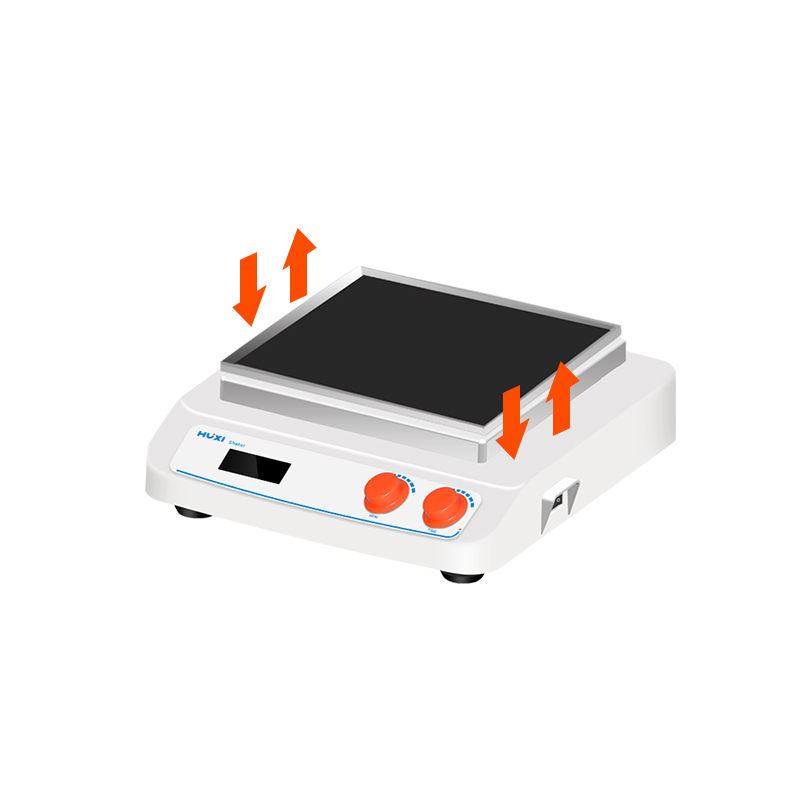
Selecting the correct agitation equipment requires matching the mechanical motion to the specific physical requirements of the assay. Different protocols demand different fluid trajectories. Utilizing the wrong modality severely impacts assay performance.
The 2D see-saw rocker operates on a single-axis pivot. It creates a linear up-and-down tilting motion. This movement generates a consistent, rhythmic wave that travels back and forth across the length of a container. For Western blots processed in shallow rectangular trays, the 2D rocker remains the gold standard.
The linear wave action requires minimal buffer volume to keep the membrane continuously hydrated. As the platform tilts, the fluid washes over the membrane. As it tilts back, the fluid recedes. This ensures no area remains submerged in stagnant liquid or exposed to the air for too long. The linear motion perfectly matches the geometry of standard blot boxes, whether you are processing 7x9 cm mini-gels or larger format blots.
A 3D gyro-rocker utilizes a central pivot mechanism. It creates a three-dimensional, circular nutating tilt. Instead of a simple back-and-forth wave, the fluid drives in a continuous sweeping motion around the perimeter and center of the vessel. This makes the 3D mechanism the ideal gel staining shaker.
When processing thick polyacrylamide gels in deeper containers, you need multi-directional fluid penetration. The nutating motion forces stains and destaining buffers into the gel matrix from all angles. This dramatically accelerates the clearing process and provides uniform band visualization. It also works exceptionally well for mixing blood samples in tubes or washing larger 3D tissue cultures.
You must differentiate when a standard laboratory shaker is appropriate versus when specialized rocking equipment is required. Orbital shakers generate a horizontal circular motion. They effectively aerate bacterial cultures in Erlenmeyer flasks. They also mix large volumes of liquid where centrifugal force helps blend the contents.
Conversely, a microplate shaker operates with a very tight orbit, often 2 to 3 millimeters. It runs at exceptionally high speeds to agitate tiny volumes within 96-well or 384-well plates.
Both orbital and microplate modalities fail when applied to flat membrane blots. The circular motion of an orbital shaker pools liquid either in the center of the tray or pushes it entirely to the outer edges due to centrifugal force. In a rectangular blot box, this rotational fluid dynamic leaves the corners of the membrane completely dry. You get high background noise in the center and zero signal at the edges. Dedicated rockers eliminate this issue by maintaining a linear or nutating wave that respects the geometry of standard blotting trays.
When upgrading lab infrastructure, evaluate the technical specifications of agitation equipment to ensure long-term reliability. Base your procurement decisions on precise control mechanisms, geometric flexibility, and environmental durability.
Protocol standardization across different technicians requires exact reproducibility. Equipment featuring digital speed controls, typically ranging from 5 to 100 RPM, outperforms analog dial models. Analog dials degrade over time. They make it impossible to record the exact speed used for a successful experiment. Digital interfaces allow lab managers to map specific RPM ranges directly to workflow steps.
10 to 15 RPM: Ideal for overnight 4°C primary antibody incubations. The slow speed prevents membrane damage and conserves low-volume reagents.
20 to 30 RPM: Suitable for standard blocking phases at room temperature.
40 to 60 RPM: Provides the aggressive fluid movement needed during short, room-temperature wash steps to clear unbound antibodies.
The geometric relationship between tray size, buffer volume, and tilt angle dictates reagent conservation. High-quality platforms offer adjustable tilt angles, usually ranging from 1° to 15°. A steep tilt angle forces the fluid to travel faster and pool deeper at the ends of the tray. Consequently, a steep angle requires a significantly larger volume of buffer to ensure the membrane remains covered at the peak of the tilt.
A shallow angle creates a gentle, rolling wave. This keeps the membrane hydrated using a fraction of the expensive antibody diluent. Adjustability allows the technician to optimize the angle based on the specific dimensions of the blot box. A 7x9 cm mini-gel tray requires a different tilt angle than a large 15x15 cm tray to achieve the same fluid dynamics.
Bench space remains a premium commodity in any research facility. When evaluating capacity, choose between single-platform units and double-tier or multi-tier stacking systems. Tiered platforms allow labs to double or triple their throughput without expanding the equipment footprint.
However, vertical scalability introduces a physical trade-off. Increasing the height of the payload shifts the center of gravity. If the structural integrity of the base is weak, a fully loaded top tier causes the entire unit to wobble. This results in uneven agitation and potential spillage. Look for units with heavy cast-iron or weighted bases to counteract the top-heavy load of multi-tier setups.
Equipment failure mid-protocol ruins experiments. A motor dying overnight during a primary antibody incubation irreversibly destroys a PVDF membrane. To prevent this, a professional-grade laboratory rock shaker must feature a brushless DC motor. Brushless motors operate without physical friction. They do not generate heat that could transfer through the platform and degrade sensitive proteins. They handle continuous, 24/7 operation without wearing out carbon brushes.
Environmental durability matters just as much. Blotting workflows frequently require equipment to operate inside 4°C cold rooms or 37°C high-humidity incubators. Standard motors contain lubricants that thicken at low temperatures, causing the mechanism to seize. Moving equipment in and out of cold rooms causes severe condensation. This moisture short-circuits unprotected printed circuit boards. Verify that the equipment features cold-room compatible grease and conformal-coated electronics to withstand these harsh environmental transitions.
Shaker Modality and Application Matrix
Motion Modality | Primary Application | Ideal Vessel Type | Fluid Dynamic Characteristic |
|---|---|---|---|
2D See-Saw Rocking | Western Blotting, Membrane Washes | Shallow Rectangular Trays | Linear, back-and-forth wave; low volume requirement. |
3D Nutating/Gyrating | Gel Staining, Destaining | Deep Trays, Tubs | Multi-directional sweeping; deep matrix penetration. |
Orbital Shaking | Bacterial Culture, Extraction | Erlenmeyer Flasks, Beakers | Horizontal circular motion; centrifugal pooling. |
Microplate Shaking | ELISA, 96-well Assays | Microtiter Plates | Tight orbit, high-speed vibration; well-contained mixing. |
Even with optimal equipment, you must navigate operational risks and workflow trade-offs during implementation. Proper training and protocol adjustments maximize the lifespan of the hardware and the quality of the assays.
Buffer evaporation during overnight rocking presents a significant operational risk. Continuous air exposure over 12 to 16 hours in a cold room reduces the buffer volume. This leads to dried-out edges on the membrane. Technicians must use sealed blot boxes or apply parafilm to maintain humidity. Spillage is another frequent risk. This happens when technicians miscalculate the tilt and speed ratios for the depth of the tray. Running a deep tray at a steep angle and high RPM inevitably ejects wash buffer onto the platform. This damages the equipment and cross-contaminates adjacent samples.
Calculate your average daily throughput to determine whether single-tier or multi-tier platform capacities fit your workflow demands.
Measure available cold-room bench space to ensure the selected footprint does not obstruct other critical refrigeration equipment.
Request technical specification sheets from manufacturers to verify brushless motor architecture and 4°C environmental operating ranges.
Audit your current inventory of blot boxes and trays to ensure their dimensions align with the maximum tilt angle and platform size of the new equipment.


