
+86-182-1720-1300 zhaoxuemei1@huxishiye.com
Language
Please Choose Your Language

Views: 0 Author: Site Editor Publish Time: 2026-07-01 Origin: Site


Rotational speed generates the centripetal acceleration needed to separate particles based on density. When the rotor spins, it applies outward force to the samples. Denser particles migrate toward the bottom of the tube. Lighter components remain suspended above them. This physical process seems straightforward. However, the exact speed dictates the entire success of the operation.
Operating a Centrifuge below the required speed introduces hidden operational costs. Incomplete pelleting stands out as the most common issue. When separation fails to finish, supernatants remain contaminated with particulate matter. Technicians must repeat the spin cycle. This repetition wastes valuable processing time. It also delays downstream diagnostic or analytical procedures.
Conversely, applying excessive speed creates even greater risks. Delicate biological structures cannot withstand extreme g-forces. Over-speeding routinely causes structural damage to cell membranes. It can trigger irreversible protein denaturation. Furthermore, mechanical stress compromises sample containers. Tube failure leads to total sample loss. It can also cause severe internal damage to the equipment itself.
You must define success metrics for your separation protocols. A truly successful protocol maximizes both purity and yield. It minimizes overall processing time. It also reduces mechanical wear on your lab equipment. Balancing these factors requires precise control over operational speeds.
Chart: Operational Speed Impact Matrix | ||
Speed Condition | Sample Impact | Operational Consequence |
|---|---|---|
Under-Speeding | Incomplete pelleting, mixed phases | Wasted time, repeated cycles |
Optimal Speed | Clear supernatant, firm pellet | High throughput, preserved integrity |
Over-Speeding | Cell lysis, protein denaturation | Sample loss, equipment wear |
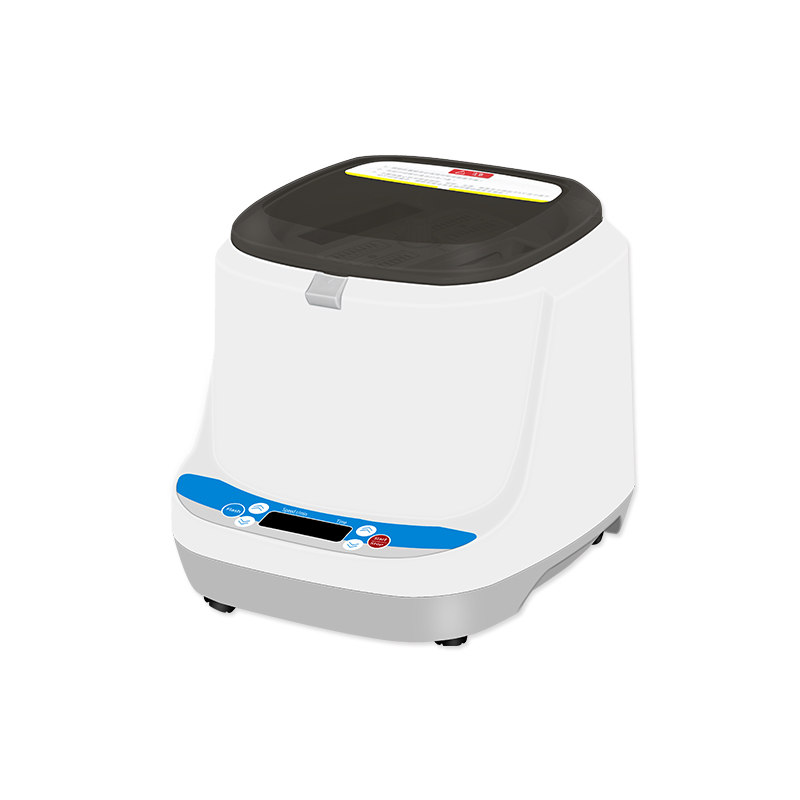
Laboratory professionals often confuse Revolutions Per Minute (RPM) and Relative Centrifugal Force (RCF). You must clearly separate these two terms. RPM simply measures the speed of the rotor. It tells you how many times the rotor completes a full turn in one minute. RCF measures the actual gravitational force applied to the sample. We often refer to RCF as g-force.
The rotor radius heavily influences this dynamic. Two units running at the exact same RPM will produce drastically different forces if their rotor radii differ. A larger radius generates significantly more outward force at a given RPM. For instance, spinning a micro-rotor at 10,000 RPM creates much less force than spinning a large fixed-angle rotor at the same speed.
Standardized lab protocols strictly use RCF. Researchers publish their methods using g-force to ensure universal reproducibility. Procuring equipment based purely on maximum RPM remains a common mistake. You must calculate the exact RCF for specific rotors. Failing to match RCF requirements leads to incompatible equipment. It ultimately results in non-compliant laboratory processes.
Always convert published RCF values into RPM for your specific rotor before starting a run.
Post conversion charts near the equipment for quick reference.
Train new laboratory personnel on the mathematical relationship between radius and g-force.
Standard benchtop units serve different functions than dedicated high-speed models. You must establish baseline metrics to differentiate them. Standard units typically operate at lower speeds. Dedicated high-speed models easily reach rotational speeds between 15,000 and 30,000 RPM. These incredible speeds generate the massive g-force capabilities required for complex separations.
Application dictates your selection. Standard speed units perform perfectly for basic clinical tasks. They handle blood separation easily. They work well for cell culture harvesting. Routine clinical diagnostics rarely require massive gravitational forces.
However, complex biological protocols demand specialized equipment. A High Speed Centrifuge becomes mandatory for advanced procedures. Nucleic acid extraction requires extreme force to precipitate DNA and RNA. Organelle isolation demands intense speeds to separate tiny cellular components. Processing viral vectors also necessitates high g-force capabilities to achieve required purity levels.
Scalability requires careful consideration. You must assess your laboratory's long-term trajectory. Should you invest in a high-speed unit for future versatility? Or do you need a specialized standard unit for high-throughput, repetitive tasks? A specialized lab focused purely on blood banking benefits from standard units. A growing research facility usually requires high-speed versatility to adapt to changing protocols.
Extreme rotational speeds generate significant aerodynamic friction inside the chamber. This friction creates rapid temperature increases. High-speed applications almost always require integrated refrigeration. Cooling systems maintain sample viability. For example, keeping biological samples strictly at 4°C prevents enzyme degradation. Without adequate cooling, delicate proteins denature rapidly during a spin cycle.
Rotor fatigue presents a serious mechanical risk. High speeds place immense mechanical stress on metal components. Metal eventually fatigues under repeated high-stress cycles. You must implement strict lifecycle management for all rotors. Industry standards dictate derating rotors over time. Derating means permanently reducing the maximum allowed speed as the rotor ages. This practice prevents catastrophic metal failure.
Advanced imbalance detection systems provide critical safety nets. Even a tiny weight discrepancy becomes dangerous at 25,000 RPM. Modern units utilize sophisticated vibration sensors. If they detect an imbalance, they immediately abort the run. This automated protection saves the equipment from self-destruction. More importantly, it protects lab personnel from dangerous flying debris.
Ignoring rotor expiration dates or cycle counts.
Failing to pre-cool the chamber before loading temperature-sensitive biologicals.
Balancing tubes by volume instead of exact mass.
Selecting the right equipment requires a structured evaluation process. You must eliminate guesswork from procurement. Follow a systematic approach to match your laboratory protocols with the correct technical specifications.
Audit Protocol Requirements: Start by reviewing your most demanding current and near-future protocols. List the maximum RCF required. Do not list the RPM. Identify the specific tube sizes you process most frequently.
Evaluate Rotor Versatility: Assess the interchangeable rotor options offered by the vendor. You might need fixed-angle rotors for high-speed pelleting. You may also require swing-bucket rotors for delicate gradient separations. Ensure the specific model accommodates both types.
Execute Next-Step Actions: Recommend initiating formal vendor demonstrations. Request specific rotor and RCF capability charts directly from manufacturers. Verify all environmental requirements before committing to a purchase. You must check power draw specifications, available bench space, and necessary ventilation clearances.
This systematic framework ensures alignment between your daily operations and your capital investments. It prevents under-equipping your facility while avoiding unnecessary expenditures on oversized equipment.
Centrifuge speed serves as the foundational metric dictating sample purity and workflow efficiency.
Evaluating high-speed equipment requires translating protocol RCF needs into exact hardware specifications.
Laboratories must aggressively account for physical safety, rotor fatigue, and thermal management during high-speed operations.
Take immediate action by consulting equipment specialists and reviewing detailed technical specification sheets before finalizing your procurement decisions.


