
+86-182-1720-1300 zhaoxuemei1@huxishiye.com
Language
Please Choose Your Language

Views: 0 Author: Site Editor Publish Time: 2026-08-08 Origin: Site


Selecting the correct tube for your centrifugation workflow directly impacts sample integrity and equipment lifespan. The tube serves as the primary interface between your sample and intense mechanical stress. Mismatched tubes and rotors introduce severe operational risks. You might face sample loss, cross-contamination, or catastrophic tube failure. Such failures can cause expensive damage to the rotor or drive shaft. We will explore a structured approach to evaluating and selecting the correct tube types, materials, and formats. This guide helps you optimize performance, ensure regulatory compliance, and protect your equipment investments. Proper selection prevents unexpected downtime and maintains the accuracy of your analytical results across all processing stages.
RCF Trumps RPM: Tube selection must be dictated by the Maximum Relative Centrifugal Force (RCF) rating of the tube material, not just the RPM capabilities of the centrifuge.
Material Trade-offs: The choice between polypropylene, polycarbonate, fluoropolymers, and glass involves strict trade-offs between chemical resistance, optical clarity, and thermal stability.
Rotor Compatibility: Standardizing tube types requires a parallel evaluation of fixed-angle versus swinging-bucket rotors, alongside the availability of scalable adapter systems.
Specialized Formats: High-throughput workflows necessitate dedicated equipment or specialized rotors, such as a microplate centrifuge or specific adapters for PCR plates, to maintain uniform g-force distribution.
Thermal Limits: Freezing temperatures (e.g., -80°C storage) and autoclaving (121°C) significantly degrade the maximum RCF threshold of plastic consumables.
Successful centrifugation requires meeting strict baseline requirements. You need zero sample leakage during operation. The tube must maintain structural integrity under maximum load. You also require zero chemical leaching into the sample. Failing any of these criteria ruins experiments and damages equipment. The tube must withstand the exact forces applied by the rotor. It must also resist the chemicals contained within the sample. When you load a rotor, you are trusting the plastic or glass to hold back thousands of times the force of gravity. A single weak point in the tube wall will cause a rupture, leading to a massive imbalance and potential drive shaft bending.
Manufacturers rate tubes by g-force rather than RPM. RPM only measures rotational speed. RCF measures the actual gravitational force exerted on the tube. The rotor radius dictates this force. A large rotor generates more force than a small rotor at the same RPM. You must calculate RCF to ensure tube safety. Relying solely on RPM is a common operational error that leads to consumable failure.
Use the standard formula for converting RPM to RCF: RCF = 1.118 × 10⁻⁵ × r × RPM⊃2;. In this formula, 'r' represents the rotor radius in centimeters. Exceeding RCF limits causes micro-fractures in the plastic. This leads to crazing or catastrophic failure during a run. Always check the manufacturer's RCF rating for your specific tubes. For example, a tube rated for 15,000 x g will shatter if run at 25,000 x g, regardless of whether it fits in the rotor cavity.
High pressure accelerates chemical interactions. Solvents like phenol, chloroform, and DMSO interact aggressively with certain plastic polymers. This interaction weakens the tube structure. It also risks plasticizer leaching into sensitive biological samples. Leached chemicals compromise downstream mass spectrometry or sequencing results. You must match the tube material to your specific solvent. Never assume universal chemical resistance across all plastic types. Polycarbonate, for instance, will dissolve rapidly when exposed to strong bases or certain organic solvents under centrifugal load.
Exact dimensional matching is critical. The tube, the adapter, and the rotor cavity must fit perfectly together. Gaps allow the tube to expand under centrifugal force. This expansion causes uneven stress distribution. Uneven stress leads to immediate tube rupture. Always use the specific adapters recommended by the equipment manufacturer. Do not use makeshift cushions or modified adapters. If a 50 mL conical tube is placed in a round-bottom bucket without the proper conical adapter, the entire force is concentrated on the tip, causing it to punch through the bottom instantly.
Temperature drastically alters mechanical strength. Sub-zero storage changes plastic polymer flexibility. Cryogenic or -80°C preservation renders tubes highly brittle. This brittleness significantly reduces their maximum RCF tolerance. Transitioning a frozen tube directly to a laboratory centrifuge invites failure. You must allow tubes to thaw or use materials specifically rated for frozen centrifugation. Conversely, repeated autoclaving at high temperatures degrades the polymer chains, lowering the RCF rating over the lifespan of the reusable tube.
Standard Eppendorf-style tubes dominate small-volume workflows. You typically use 0.5 mL, 1.5 mL, and 2.0 mL sizes in a dedicated microcentrifuge. Snap-cap designs offer quick access for routine tasks. Screw-cap designs provide superior aerosol containment. You need screw caps for boiling applications and organic solvent storage. Low-retention surface modifications prevent protein and nucleic acid adsorption. These modified tubes maximize yield for sensitive assays. When working with radioactive isotopes or highly infectious agents, screw-cap tubes with silicone O-rings are mandatory to prevent aerosolization during the spin.
Falcon-style conical tubes are ubiquitous in cell culture and sample preparation. They require conical-bottom adapters in standard rotors. These adapters support the angled base to prevent bottom-out failure. Evaluate the structural features before purchase. Check graduation legibility and write-on patch durability against laboratory solvents like ethanol. Skirted configurations stand independently but often have lower RCF ratings. Non-skirted configurations withstand higher g-forces but require racks. Always verify the maximum RCF rating, as standard 50 mL tubes often max out around 9,000 to 12,000 x g, while high-speed variants can reach 17,000 x g.
High-speed, large-volume separations require specific designs. Oak Ridge-style tubes handle these demanding applications. Round bottoms provide distinct structural advantages. They handle high g-forces without stress concentrators at the base. Sealing cap assemblies are necessary for containing hazardous chemicals. These assemblies often include sealing silicone O-rings. They prevent leaks during high-velocity runs. When using these tubes, you must fill them to the manufacturer's recommended volume, usually at least 80%, to prevent the walls from collapsing inward under the vacuum created by high-speed rotation.
Ultracentrifugation demands extreme performance. You use thin-walled, heat-sealable tubes for these applications. Polyallomer or Beckman Quick-Seal tubes are common choices. They must conform exactly to the rotor cavity under extreme g-forces. These forces can reach up to 1,000,000 x g. The fluid inside supports the thin walls. You must fill them completely to prevent collapse. Any air bubble left inside a heat-sealed tube will cause the tube to crumple, leading to sample loss and severe rotor imbalance at speeds exceeding 100,000 RPM.
PCR plastics are structurally fragile. They feature thin walls for optimal heat transfer. Wells typically hold 0.1 mL to 0.2 mL. This fragility requires careful handling. You need a dedicated PCR plate centrifuge or specialized plate carriers. These tools prevent warping and ensure complete liquid spin-down. They also maintain seal integrity. You must protect both adhesive films and heat seals during the run. If the plate carrier does not support the center of the PCR plate, the middle wells will bow downward, breaking the seal and causing evaporation or cross-contamination.
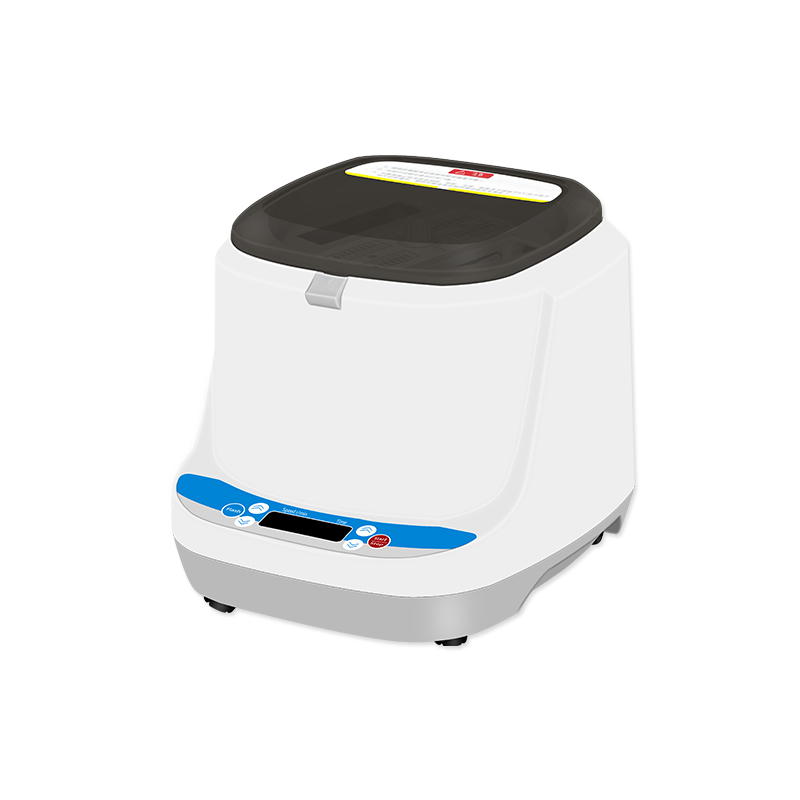
High-throughput screening relies on multi-well formats. Genomics and compound storage workflows use deep-well plates. You need specific equipment for these formats. A microplate centrifuge handles these tasks efficiently. It uses swinging-bucket rotors to keep plates perfectly horizontal. This horizontal alignment prevents cross-contamination across wells. It ensures all liquid reaches the bottom of the well uniformly. When balancing deep-well plates, you must account for the weight of the sealing mats or films, as these add significant mass that can throw off a sensitive rotor.
Clinical diagnostics frequently use glass capillary tubes. These tubes measure hematocrit levels in blood samples. They require specific micro-hematocrit rotors. These rotors hold the thin glass safely during high-speed rotation. You must handle them carefully to avoid shattering. Proper sealing clay is required at one end before centrifugation. The clay plug must face the outside of the rotor to prevent the blood from being forced out during the spin.
Polypropylene offers high chemical resistance. It is excellent for high RCF applications. It withstands up to 20,000+ x g in microcentrifuges. You can autoclave it at 121°C for 20 minutes at 15 psi. However, polypropylene is opaque or translucent. Polycarbonate provides high optical clarity. It has good mechanical strength. But it is highly susceptible to chemical attack from alcohols and bases. It is also prone to crazing and weakening over multiple autoclave cycles.
Material | Chemical Resistance | Optical Clarity | Autoclavable | Max RCF Tolerance |
|---|---|---|---|---|
Polypropylene (PP) | Excellent | Translucent | Yes | High (>20,000 x g) |
Polycarbonate (PC) | Poor (Alcohols/Bases) | Excellent (Clear) | Limited (Weakens) | High |
Fluoropolymers (FEP/PFA) | Universal | Translucent | Yes | Medium to High |
Polystyrene (PS) | Poor | Excellent (Clear) | No | Low (<3,000 x g) |
Fluoropolymers serve niche, high-performance applications. They offer near-universal chemical inertness. They withstand extreme temperature resistance from -270°C to +250°C. They are suitable for highly corrosive samples. However, they come with trade-offs. They have higher costs and high density. You must account for this density when balancing the rotor. Because fluoropolymer tubes are heavier than standard plastics, you cannot balance a fluoropolymer tube against a polypropylene tube using only volume; you must use a scale.
Evaluate PET and PS for low-speed applications. They are common in clinical or cell culture workflows. Optical clarity is paramount for these tasks. However, RCF limits are strictly low, typically under 3,000 x g. Polystyrene is non-autoclavable and highly fragile. Never use these materials for high-speed separations. If you attempt to spin a polystyrene tube at 10,000 x g, it will shatter into sharp shards, ruining the sample and requiring a complete teardown and cleaning of the rotor bucket.
Glass tubes handle specific niche applications. They provide extreme chemical resistance. You use them for organic solvent extractions and high-temperature applications. However, they have severe RCF limitations. They typically withstand less than 3,000 x g. You have an absolute requirement for thick rubber adapters or cushions. These cushions prevent the glass from shattering under load. Inspect glass tubes for microscopic scratches before every use, as these act as stress concentrators that lead to failure during centrifugation.
You must map tube types to rotor dynamics. Conical tubes pellet differently based on the rotor. In a fixed-angle rotor, the pellet smears on the side wall. In a swinging-bucket rotor, you get a tight pellet at the absolute bottom. The angle of a fixed-angle rotor influences the liquid-air interface. It stresses the tube walls unevenly. You must select tubes rated for these specific stress points. Thin-walled tubes designed for swinging buckets will often collapse if used in a fixed-angle rotor because they cannot handle the lateral shear forces.
Evaluate equipment purchasing based on adapter availability. Select equipment that supports modular adapters for multiple tube sizes. You might need to convert a 50 mL bucket to hold multiple 1.5 mL tubes. Or you might need to hold 15 mL conical tubes within a single rotor. Scalable adapters future-proof your investment. They allow your lab to adapt to new workflows without buying new rotors. When purchasing a Centrifuge, always request the full adapter compatibility chart to ensure it meets your long-term processing needs.
Evaluate tubes based on strict manufacturing standards. Ensure they are RNase/DNase-free and non-pyrogenic. Check for sterile ratings like SAL 10^-6 and autoclavability. Tube certification impacts clinical and biopharmaceutical compliance. You must meet standards like USP Class VI and ISO 13485. Proper certification ensures data integrity and patient safety in regulated environments. Using non-certified tubes in a clinical setting violates standard operating procedures and invalidates diagnostic results.
Implement strict protocols for inspecting tubes before use. Look for stress lines, known as crazing, and discoloration. Discard any compromised consumables immediately. Understand the impact of temperature on RCF thresholds. Refrigerated centrifugation at 4°C increases plastic brittleness. This reduces the maximum RCF the tube can withstand compared to ambient temperatures. Adjust your speed accordingly. Establish a routine inspection schedule for all reusable tubes.
Hold the tube up to a bright light to check for micro-cracks.
Squeeze the tube gently to test for abnormal brittleness.
Inspect the O-ring on the cap for flattening or dry rot.
Verify the manufacturer expiration date on the packaging.
Rotor imbalance causes severe mechanical damage. Unmatched tube masses bend the drive shaft. Asymmetrical loading destroys bearings. Always balance tubes by mass, not just volume. Multi-well plates require specific balancing in a microplate rotor. You must balance the plate carrier exactly. Use a blank plate filled with water to match the sample plate mass. Never run a rotor with an odd number of tubes unless you use a precisely weighed balance tube directly opposite the sample.
Protect operators from infectious, radioactive, or pathogenic agents. Use O-ring sealed tubes for primary containment. Use biocontainment rotor lids or buckets for secondary containment. Inspect O-rings regularly for wear and tear. Replace them if they show any signs of degradation. Proper containment prevents laboratory-acquired infections and facility contamination. Always open biocontainment lids inside a biosafety cabinet, never on the open bench, to ensure any generated aerosols are safely captured.
High-speed and thin-walled tubes require specific fill volumes. Running them underfilled causes vacuum collapse. The external pressure crushes the empty space. Follow manufacturer guidelines on minimum and maximum fill volumes. This is critical for Oak Ridge and ultracentrifuge tubes. Proper filling maintains structural integrity and prevents catastrophic sample loss. Overfilling a tube will cause the liquid to bypass the threads of the cap, leaking into the rotor cavity and causing an immediate imbalance.
Audit your current laboratory workflows to identify and consolidate overlapping tube types, reducing inventory complexity.
Cross-reference your existing tube inventory with the manufacturer RCF charts to ensure no consumables are being pushed beyond their mechanical limits.
Implement a strict mass-balancing protocol using laboratory scales for all high-speed and large-volume centrifugation runs.
Upgrade to modular rotor systems and scalable adapters if your current processing is bottlenecked by incompatible tube formats.
A: Standard high-quality polypropylene microcentrifuge tubes typically withstand between 20,000 and 30,000 x g. However, this depends on the manufacturer, temperature, and rotor type. Always verify the specific rating on the product packaging before running high-speed protocols.
A: No. Polycarbonate is highly susceptible to chemical attack from many organic solvents, bases, and alcohols. Using them for these extractions will cause crazing, leaking, and catastrophic failure. Use polypropylene, fluoropolymers, or glass instead.
A: PCR plates warp when subjected to excessive g-forces or when used without proper plate carriers. Thin-walled plastics lack structural rigidity. Always use a dedicated plate rotor and adhere to strict RCF limits, usually under 3,000 x g.
A: You must always balance tubes by mass. Different samples have different densities. Equal volumes of different liquids will have different weights, causing rotor imbalance. Use a laboratory scale for high-speed applications to ensure exact symmetry.
A: Cold temperatures make plastic polymers brittle, significantly reducing their maximum RCF tolerance. High temperatures, like autoclaving, can weaken the structural integrity over time. Always check the thermal ratings provided by the manufacturer before processing.


