
+86-182-1720-1300 zhaoxuemei1@huxishiye.com
Language
Please Choose Your Language

Views: 0 Author: Site Editor Publish Time: 2026-08-02 Origin: Site


Processing thick pastes often pushes standard equipment well beyond its failure point. Heavy slurries and high-solids industrial materials demand immense mechanical force. Ordinary motors simply cannot handle this extreme resistance. You frequently experience stalled motors and incomplete homogenization during routine laboratory runs. Additionally, shear-induced thermal degradation ruins sensitive samples before testing even begins. Inadequate mixing produces highly inconsistent scale-up data. This directly compromises critical pilot-plant transitions. We must secure reliable equipment to eliminate these frustrating scientific and operational risks.
Our primary objective is straightforward. We provide a strictly technical, decision-stage framework for your next equipment upgrade. You will learn how to evaluate and properly select specialized mixing systems. This guide helps you confidently choose a purpose-built solution for the most demanding high-viscosity applications.
Standard motors fail when they encounter exponential resistance. Thick slurries act like a physical brake on spinning impellers. As viscosity rises, the mechanical load on the drive system spikes violently. Entry-level equipment lacks the necessary gear reduction to sustain rotational force. The internal circuitry overheats quickly. The motor stalls to prevent catastrophic electrical failure. You are left with an abandoned batch. We see this constantly when researchers try to process heavily filled polymers. A standard laboratory mixer simply cannot maintain the torque required for dense, non-flowing pastes.
Improper mixing creates harsh physical realities in high-viscosity fluids. Thick materials resist flow. They do not easily fold into themselves. Standard impellers simply carve a hole in the center of the paste. This phenomenon is called channeling. The blade spins freely while the surrounding material sits perfectly still. This creates large fluid dead zones. Only the material touching the blade experiences shear. This localized over-shearing degrades the fluid structure. Furthermore, standard agitation aggressively folds air into the batch. Thick liquids trap these air pockets permanently. This ruins product consistency and skews volumetric measurements.
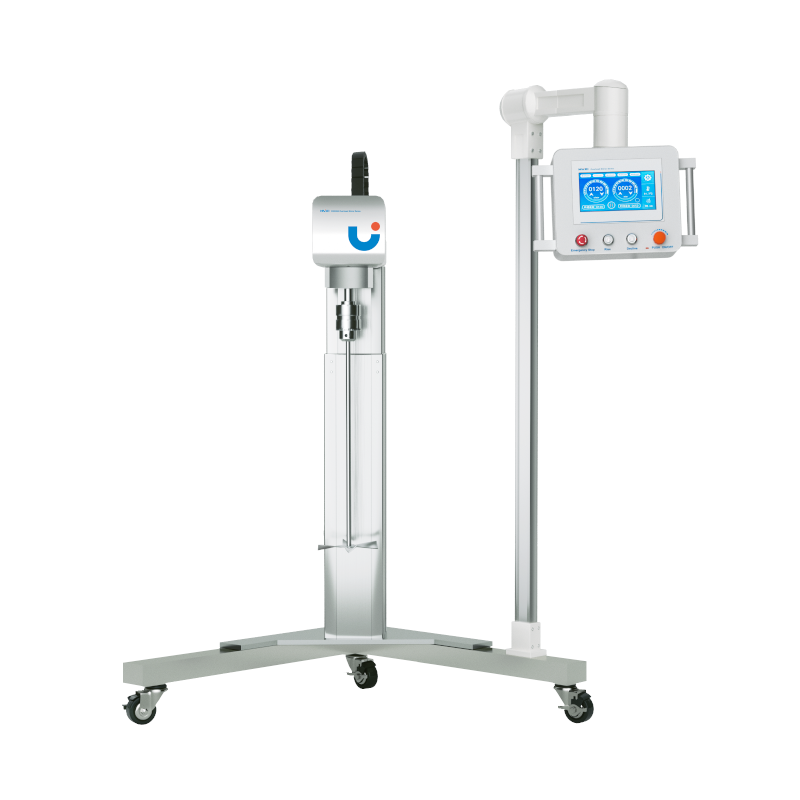
Buying cheap entry-level equipment feels budget-friendly initially. This approach creates a massive false economy. Weak motors burn out under heavy loads. You must replace them frequently. Equipment downtime severely stalls your research timeline. Wasted raw materials from abandoned batches drain your project funds. Upgrading to a purpose-built Powerful Mixer eliminates these operational penalties. You gain reproducible results on the first attempt. We strongly recommend investing upfront in capable hardware to avoid chronic hardware replacement cycles.
Viscosity is measured in centipoise (cP). Water sits at 1 cP. Honey measures around 10,000 cP. Peanut butter easily exceeds 250,000 cP. These ranges heavily dictate your equipment architecture. Low-viscosity fluids flow easily. They require simple agitation to maintain homogenization. High-viscosity materials behave like solid masses until sufficient force is applied. Equipment architecture must shift dramatically once you cross the 50,000 cP threshold. Motors must grow larger. Shafts must become thicker. Impellers must span the entire vessel diameter. Understanding your exact cP target prevents severe equipment mismatches.
Viscous fluids do not behave uniformly under agitation. We must understand shear dependency. Shear-thinning fluids become less viscous as you stir them. Ketchup is a classic pseudoplastic example. It resists movement initially but flows smoothly once agitated. Shear-thickening fluids behave oppositely. They increase in viscosity when subjected to mechanical force. Dilatant fluids like cornstarch slurries turn nearly solid under high-speed mixing. Sustained agitation demands distinct handling for each type. You must map your fluid rheology before finalizing any equipment decisions.
Torque determines your mixing capability. It is the rotational force applied to the fluid. Manufacturers often advertise peak torque ratings. These numbers look impressive on a specification sheet. However, peak torque only lasts for a few seconds. It helps overcome initial resting inertia. Processing viscous materials requires continuous effort. You must demand sustained, continuous-duty torque specifications. A genuine high torque mixer delivers consistent force over a multi-hour cycle without overheating. Always verify continuous performance metrics before purchasing.
Matching blade geometry to fluid viscosity prevents mixing failures. Standard marine propellers fail in thick pastes. They cannot push dense materials radially. Anchor and sweep blades provide excellent wall-scraping action. They constantly clear stagnant material from the edges. This prevents localized overheating on the vessel walls. Helix and ribbon impellers excel at vertical turnover. They lift heavy pastes from the bottom of the vessel. They fold the material back over itself. This creates a uniform batch profile in highly viscous environments.
| Impeller Type | Optimal Viscosity Range (cP) | Primary Flow Pattern | Key Application |
|---|---|---|---|
| Standard Propeller | 1 - 10,000 | Axial (Top to Bottom) | Water-like liquids, light oils |
| Anchor / Sweep Blade | 10,000 - 100,000 | Radial / Wall-Scraping | Heat-sensitive gels, medium pastes |
| Helix / Double Ribbon | 100,000 - 500,000+ | Vertical Turnover | Heavy slurries, non-flowing pastes |
Modern equipment must protect itself. Viscosity changes dynamically during curing or cooling phases. Resistance can spike unpredictably. You need dynamic torque measurement built into the drive unit. The system should constantly monitor the mechanical load. Auto-stop features are absolutely necessary. Thermal cutoffs prevent the internal coils from melting. If the slurry thickens beyond safe limits, the machine must shut down gracefully. This feedback loop protects your investment. It also provides valuable data regarding fluid behavior over time.
Regulatory environments demand strict traceability. GMP facilities require validated processes. FDA regulations mandate comprehensive batch tracking. Your equipment must support these requirements natively. Look for models featuring RS232 or USB interfaces. These connections allow continuous data logging. You can record RPM, torque output, and temperature fluctuations per second. This data proves batch reproducibility. It confirms the material received identical mechanical treatment every single time. Scale-up operations rely entirely on this historical data.
High mechanical friction generates immense heat. Viscous fluids act as excellent insulators. They do not naturally dissipate thermal energy well. When you aggressively mix thick pastes, internal temperatures rise rapidly. This localized heat destroys sensitive organic compounds. It prematurely triggers chemical curing agents. You must evaluate the need for active thermal management. Consider integrating jacketed mixing vessels. These double-walled containers allow chilled or heated fluids to circulate. They pull dangerous heat away from the batch instantly.
High-viscosity mixing inherently traps air. Thick pastes cannot release bubbles to the surface naturally. Aerated products fail density specifications. They show visible defects upon curing. You must assess the equipment's compatibility with vacuum processing. You cannot simply place a standard setup inside a vacuum chamber. The seals will blow out. Motors might arc in low-pressure environments. Select a specialized system featuring sealed, vacuum-rated vessels. Connect a capable vacuum pump to extract trapped gases continuously while mixing.
Removing heavy pastes from complex impellers is a massive operational headache. Cured epoxies and thick slurries lock onto metallic surfaces. Cleaning consumes hours of valuable laboratory time. You must address Clean-In-Place (CIP) and Sterilize-In-Place (SIP) realities early. A large batch laboratory mixer requires smooth, crevice-free stainless steel construction. Look for electropolished finishes. Demand quick-release chucks. These allow technicians to detach the sticky impellers quickly. They can soak the parts outside the main unit safely.
Do not base your purchase on average viscosity numbers. Fluids change significantly during processing. Evaporation thickens the mixture. Chemical cross-linking causes sudden resistance spikes. Cooling phases increase density dramatically. You must specify your requirements based entirely on the peak resistance. Identify the exact moment when the fluid is thickest. Buy equipment rated to handle that specific maximum peak. Over-specifying torque capabilities slightly above current needs protects against future R&D scope creep.
Clarify the strict difference between maximum vessel capacity and optimal mixing volume. A five-liter beaker cannot process five liters of dense slurry. High speeds push material up the walls. Thick pastes swell during aeration. You need adequate headspace to prevent dangerous spills. An ideal working volume usually sits around sixty percent of total capacity. Calculate your batch requirements carefully. Ensure the internal geometry handles your specific volume efficiently without creating upper dead zones.
Never rely solely on glossy brochure specifications. Viscous fluids behave unpredictably. Theoretical calculations often fail in practice. You must demand vendor trial runs. Send them a non-hazardous proxy material. Ask them to document the mixing cycle via video. Request detailed case studies involving fluids structurally similar to your proprietary materials. Reputable manufacturers welcome these performance challenges. They will gladly demonstrate their equipment capabilities. This empirical evidence guarantees the hardware works before you sign a purchase order.
Evaluating specialized equipment requires moving far beyond basic RPM specifications. You must take a holistic view of the system. Sustained torque capabilities determine your true processing power. Specific impeller geometry resolves fluid dead zones. Active thermal management protects your sensitive formulas from friction-induced heat. Balancing these three variables guarantees reliable homogenization for challenging slurries.
We highly recommend over-specifying your torque requirements slightly. Formulations frequently become denser as R&D targets evolve. Extra mechanical headroom protects your workflow against future scope creep. It prevents premature hardware obsolescence.
Take action today. Audit your current laboratory batch failure rates. Identify any stalled motors or inconsistent scale-up data. Consult with specialized mixing engineers. They can provide a custom viscosity-to-equipment mapping. Secure the right hardware to guarantee reproducible success.
A: A standard stirrer uses direct-drive motors designed for high RPMs in thin liquids. They stall in thick materials. High torque variants utilize heavy-duty gear reduction. This transforms motor speed into raw rotational force. They maintain sustained continuous torque at very low RPMs. They feature robust motor housings to handle aggressive mechanical stress without burning out.
A: You must maximize the surface-area-to-volume ratio. Standard marine propellers only push water-like fluids. They cause cavitation in pastes. We recommend anchor or helical impellers for thick materials. Anchor blades scrape the walls to prevent heat buildup. Helical ribbons pull dense slurries vertically. This completely eliminates fluid dead zones.
A: The transition typically occurs between 100,000 and 500,000 cP. Standard single-shaft models struggle to move materials near the vessel walls in this range. Planetary systems use multiple rotating blades that orbit the vessel. They provide the extreme mechanical turnover needed for highly dense, non-flowing pastes.
A: Viscous mixing creates intense mechanical friction. This friction acts as a massive heat source. Specialized equipment prevents degradation by using controlled, high-torque, low-speed agitation. This reduces unnecessary shear. Furthermore, these systems integrate seamlessly with cooling jackets. Chilled fluids circulate around the vessel walls to extract heat continuously.


