
+86-182-1720-1300 zhaoxuemei1@huxishiye.com
Language
Please Choose Your Language

Views: 0 Author: Site Editor Publish Time: 2026-07-03 Origin: Site


Accidents involving high-speed rotational equipment carry compounding financial and operational penalties. Framing the business problem accurately helps administrators understand the true stakes of laboratory safety. When a rotor fails or a tube shatters, the immediate result is irrecoverable sample loss. These samples often represent weeks of intensive research or critical diagnostic patient biopsies. You cannot simply restart the experiment without losing valuable time. Furthermore, biohazard decontamination requires shutting down the immediate laboratory area completely. Facilities must halt nearby workflows while trained personnel clean the spill. Finally, catastrophic rotor failures often destroy the entire drive shaft and internal chamber. Purchasing expensive replacement equipment abruptly drains departmental budgets.
Regulatory compliance and institutional liability add another layer of complexity to these incidents. Organizations like OSHA and institutional Environmental Health and Safety (EHS) departments establish strict baseline expectations. They require laboratories to maintain flawless safety documentation for all active equipment. If an accident occurs, inspectors will immediately ask for your maintenance logs and user training records. Failing to produce these documents exposes the institution to severe penalties and legal liability. Compliance is not merely a suggestion; it represents a hard legal boundary protecting workers.
We must also acknowledge the daily operator reality. High-turnover labs routinely employ rotating graduate students, temporary post-docs, and new technicians. This multi-user environment naturally increases the risk of innocent user error. Even highly trained operators experience fatigue at the end of a long shift. They might miscalculate a load or forget to secure a lid properly. Because human perfection is impossible to sustain, equipment-level safety safeguards become a financial necessity. Investing in automated fail-safes protects the institution from the inevitable lapses in human concentration.
Implementing basic operational precautions represents your first line of defense against catastrophic failure. Symmetrical load balancing stands as the most critical daily habit operators must master. Balancing involves strict physics, not just casual estimations. You must carefully match mass, density, and pivot points across the rotor axis. Matching liquid volume alone is incredibly dangerous. Ten milliliters of pure water possesses a completely different mass than ten milliliters of a dense sucrose gradient. We highly suggest implementing standardized balancing scales directly next to the unit. Placing a dedicated digital scale on the bench forces users to verify mass empirically before loading samples.
Consumable compatibility drastically impacts overall operational safety. Operators frequently underestimate the sheer forces generated inside the spinning chamber. Using incorrect tubes invites disaster. Standard borosilicate glass tubes will easily shatter under high Relative Centrifugal Force (RCF). You must use specifically rated plastic tubes made from durable materials like polycarbonate or specialized polypropylene. Furthermore, using mismatched adapters creates uneven pressure points on the tube walls. These pressure points cause structural failure mid-run, spilling hazardous contents directly into the spinning rotor.
Instituting mandatory pre-run visual inspections prevents most common laboratory accidents. You should outline a quick-check framework for all operators to follow before engaging the motor. Every user should review this checklist:
Inspect the rubber O-rings for any visible degradation, dry rotting, or cracking.
Check the rotor seating to verify it locks completely onto the central drive spindle.
Examine every sample tube for microscopic cracks, stress lines, or warped edges.
Confirm the lid threads are entirely free of debris or dried buffer solutions.
Finally, operators must understand strict speed and temperature parameters. You must never exceed the maximum rated speed of the specific rotor currently in use. The machine itself might boast a maximum capacity of 30,000 RPM. However, a heavier fixed-angle rotor installed inside might only tolerate 10,000 RPM safely. Pushing a heavy rotor past its engineered limits causes immediate structural disintegration. Always program protocols based on the weakest link in your hardware setup.
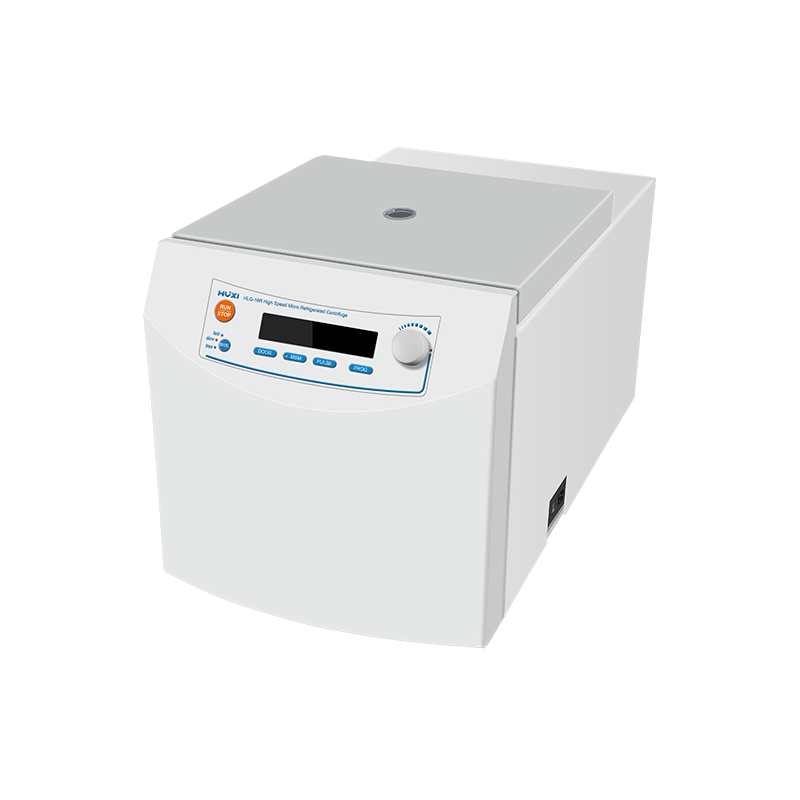
Evaluating hardware solutions shifts our focus toward the procurement and decision-making stage. Upgrading or purchasing a modern Medical Centrifuge requires looking beyond basic speed specifications. Specific built-in safeguards drastically reduce our reliance on human perfection. Modern engineering integrates smart sensors directly into the drive systems. These active features intervene automatically when a user makes a dangerous programming mistake or balancing error.
Automatic imbalance detection represents the most crucial hardware upgrade available today. Modern units utilize highly sensitive gyroscopic sensors mounted near the drive shaft. These sensors monitor the exact vibrational frequency of the spinning chamber. If an operator misbalances a load, the rotor begins to wobble slightly. The gyroscope detects this abnormal vibration at very low speeds, usually under 500 RPM. It automatically shuts down the drive motor and triggers a braking mechanism long before the system reaches dangerous velocities. This immediate intervention prevents catastrophic rotor failures and protects the internal chamber from destruction.
Auto-rotor recognition adds another vital layer of programming security. Advanced units utilize RFID chips or magnetic tracking nodes embedded underneath each interchangeable rotor. When you place a rotor onto the spindle, the machine scans it instantly. The onboard computer recognizes the specific model and automatically locks the software interface. It actively prevents users from accidentally programming speeds exceeding that specific rotor’s maximum safe RCF. If a technician types in 20,000 RPM for a rotor rated only for 15,000 RPM, the system simply refuses to start.
Motorized lid locks provide essential physical fail-safes during operation. You absolutely need secure latches preventing the lid from opening while the internal components remain in motion. High-quality systems feature dual motorized hooks clamping the lid down tightly. These locks connect directly to the motor's tachometer. They will not release until the internal velocity registers exactly at zero. Importantly, these locks remain engaged even during sudden power outages. If the facility loses electricity, the heavy rotor will continue spinning quietly for several minutes due to momentum. Redundant locking mechanisms ensure an operator cannot pry the lid open and expose themselves to the spinning metal.
Hardware Feature | Detection Mechanism | Primary Risk Mitigated |
|---|---|---|
Automatic Imbalance Detection | Gyroscopic shaft sensors monitor vibration | Prevents catastrophic hardware destruction from uneven loads |
Auto-Rotor Recognition | RFID scanning or magnetic base tracking | Eliminates accidental over-speeding by locking software limits |
Motorized Lid Locks | Dual motorized latches tied to tachometer | Prevents physical injury from accessing a spinning chamber |
Aerosol-Tight Seals | Silicone O-rings and threaded metal caps | Contains vaporized biohazards during a tube rupture |
Handling hazardous materials introduces a completely invisible threat to the laboratory environment. The primary clinical risk stems from aerosolized pathogens or volatile chemicals. If a sample tube ruptures while spinning at high speeds, the immense kinetic energy instantly vaporizes the liquid contents. This creates a fine, invisible mist of potentially dangerous biological agents. If the equipment lacks proper containment features, this mist escapes through the ventilation ports into the general laboratory air. Unprotected operators standing nearby will unknowingly inhale these pathogens.
Strict bio-containment equipment requirements mitigate this specific clinical risk. When processing raw human blood, active infectious pathogens, or volatile compounds, standard open buckets are unacceptable. You require certified aerosol-tight lids and completely sealed rotors. These specialized components utilize heavy-duty silicone O-rings and threaded locking nuts. They create an impenetrable vacuum seal around the spinning samples. Independent agencies rigorously test these seals using specialized biological markers to ensure zero leakage occurs even under extreme structural stress. Certified bio-containment components remain non-negotiable for any laboratory operating at Biosafety Level 2 (BSL-2) or higher.
Even optimal hardware requires robust emergency extraction protocols. If you suspect a tube has broken during an active run—perhaps due to an unusual sound or a sudden imbalance alarm—you must never open the rotor lid on the open bench. Standard operating procedures dictate a completely different approach. You must carefully detach the entire sealed rotor assembly from the drive shaft while keeping its lid securely fastened. Transport the intact, sealed rotor directly into a certified Biological Safety Cabinet (BSC). You may only open the aerosol-tight lid under active laminar airflow. This protocol ensures the BSC filtration system safely captures any pressurized aerosol clouds escaping from the chamber.
Optimal equipment safety ultimately combines highly disciplined user protocols with advanced hardware safeguards. You cannot rely solely on operator vigilance, nor can you expect machines to completely override poor laboratory habits. Standardizing load balancing, understanding material compatibility, and enforcing visual inspections establish a secure operational baseline.
When upgrading facility equipment, procurement teams must look past basic functional specifications. We strongly advise lab managers to weigh the upfront cost of automated safety features against the substantial long-term operational risk mitigation they provide. Imbalance detection, rotor recognition, and secure motorized locks prevent catastrophic accidents before they unfold.
Take proactive steps to secure your facility today. Audit your current laboratory operating procedures. Review your equipment logbooks to identify aging components suffering from metal fatigue. Finally, request a technical demo or a thorough compliance consultation to evaluate modernized equipment options better suited for your high-stakes workflow.


