
+86-182-1720-1300 zhaoxuemei1@huxishiye.com
Language
Please Choose Your Language

Views: 0 Author: Site Editor Publish Time: 2026-07-02 Origin: Site


Equipment operators must first evaluate the density of their samples. Materials must exist in a heterogeneous state to undergo separation. This means you are dealing with suspensions or emulsions, not true solutions. If particles are completely dissolved into a liquid, centrifugal force alone will not pull them apart. A measurable difference in density between the particles and the surrounding fluid is the absolute baseline requirement.
Stokes' Law governs the fundamental mechanics of sedimentation. It proves heavier and larger particles sediment much faster than smaller ones. When applying this formula, you see how particle radius drastically impacts settling velocity. Large, dense particles drop to the bottom rapidly. Ultra-fine particles, however, resist settling. They require immense Relative Centrifugal Force (RCF) to overcome the fluid's natural resistance. You must calculate the required force based on your smallest target particle to guarantee a clean separation.
The fluid holding your particles plays a massive role in separation efficiency. You must evaluate the specific gravity and the viscosity of this fluid. High-viscosity mediums act like a physical barrier. They slow down moving particles. For example, separating heavy metals in thick oil requires a completely different approach than isolating the same metals in an aqueous solution. You often need to heat heavy oils to lower their viscosity before processing them.
Centrifugation successfully isolates various phase combinations depending on industry needs. Here are the primary categories:
Solid-Liquid: This is the most common application. Examples include harvesting cell pellets from culture media or removing solid sludge from municipal wastewater.
Liquid-Liquid: This involves separating two immiscible liquids. Common examples include extracting oil from water or performing lipid extractions in diagnostic labs.
Gas-Isotope: Specialized industrial ultra-centrifugation separates gases. Facilities use this highly regulated process for uranium enrichment, relying on minute mass differences between isotopes.
Phase Separation Matrix | ||
Phase Combination | Common Example | Primary Driving Force |
|---|---|---|
Solid-Liquid | Cell Pellets / Wastewater Sludge | Particle Mass vs. Fluid Density |
Liquid-Liquid | Oil and Water / Lipid Extraction | Immiscibility and Specific Gravity |
Gas-Isotope | Uranium Hexafluoride (Industrial) | Atomic Mass Differences |
Moving from the laboratory bench to the manufacturing floor changes the operational scale entirely. Industrial separation focuses on continuous throughput, aggressive chemical compatibility, and massive volume processing.
In pharmaceutical production, chemical engineers must harvest Active Pharmaceutical Ingredients (APIs) from complex crystallization slurries. These slurries contain valuable solid drug compounds suspended in harsh chemical solvents. Operators use robust industrial decanters or basket centrifuges to pull the solid APIs out of the solvent. This ensures high purity levels before the final drying and pressing stages.
The food industry relies on density-based separation to refine consumer products. Dairy processing facilities use disk-stack separators to skim milk fat from raw milk, standardizing fat content for retail sale. Breweries and wineries use similar equipment to clarify their beverages. The high-speed rotation swiftly removes yeast cells and suspended hop particulates, ensuring a clear final beverage with a longer shelf life.
Environmental management and heavy industries process highly abrasive and toxic materials. Wastewater treatment plants use massive decanter units for sludge dewatering. This process reduces sludge volume, significantly cutting disposal logistics. In the petrochemical sector, rigs separate heavy drilling muds to recover expensive drilling fluids. Refineries also break stubborn crude oil and water emulsions, a critical step before oil distillation.
Benchtop rules do not apply here. Industrial success criteria demand continuous-flow capabilities to handle non-stop production lines. High-volume throughput is essential to maintain plant profitability. Furthermore, the equipment must feature highly corrosion-resistant materials. Manufacturers frequently specify titanium or specialized stainless-steel alloys to withstand aggressive acidic slurries or abrasive sand mixtures.
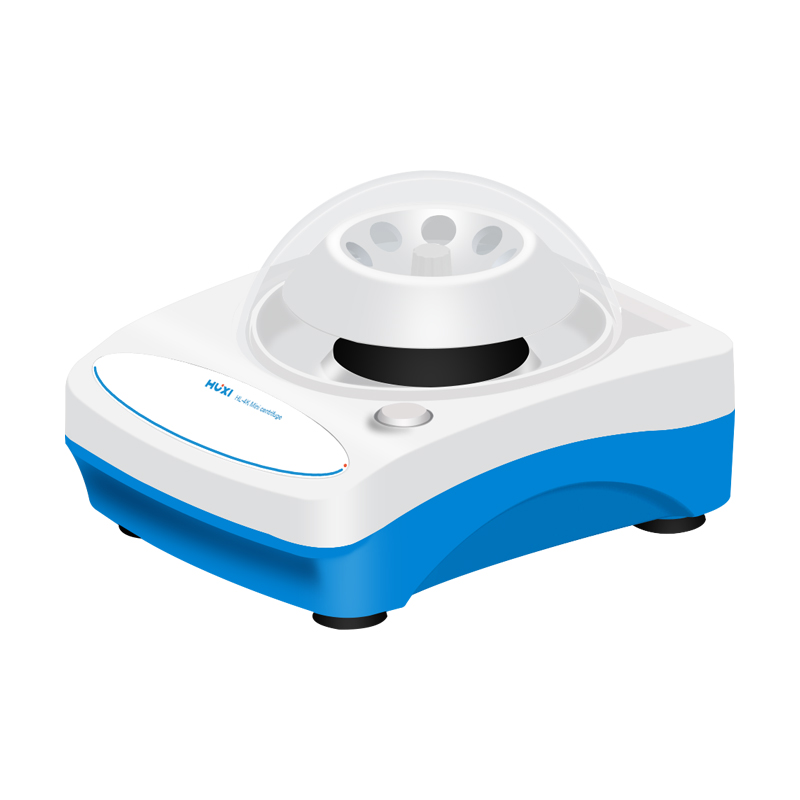
Selecting the correct hardware ensures efficient protocols. You must match your specific material properties directly to the rotor design and force capabilities of your chosen Sample Separation Centrifuge.
A common procurement error involves sizing equipment based on Revolutions Per Minute (RPM). RPM only measures rotor speed. It tells you nothing about the actual force applied to your material. Material separation must always be evaluated based on Relative Centrifugal Force (RCF), measured in g-force. A small rotor spinning at 10,000 RPM generates much less force than a large rotor spinning at the exact same speed. Always standardize your protocols using RCF.
Rotor geometry dictates how your material moves during the run. Choosing the wrong design makes sample recovery nearly impossible.
Rotor Architecture Comparison Chart | |||
Rotor Type | Mechanics during operation | Best Material Applications | Pellet Location |
|---|---|---|---|
Swinging-Bucket | Tubes swing out horizontally to 90 degrees. | Density gradients, whole blood, distinct layer isolation. | Flat at the very bottom center of the tube. |
Fixed-Angle | Tubes sit at a fixed rigid angle (usually 20-45 degrees). | Rapid pelleting of DNA, proteins, micro-organisms. | Smeared along the bottom side-wall of the tube. |
Swinging-bucket rotors are ideal for distinct layer separation. Because the tube sits perfectly horizontal during the spin, layers form perfectly flat. This makes recovering specific bands incredibly easy using a pipette.
Fixed-angle rotors excel at speed. Because the tubes remain tucked inward at an angle, the rotor cuts through the air with less drag. This allows for massive g-forces. They are best for driving tiny particles quickly to the side-wall of the tube.
Commercial units feature an inverse relationship between maximum capacity and maximum achievable g-force. You cannot spin a 3-liter bucket at 50,000 x g. The structural stress would destroy the machine. You must balance your throughput needs against your force requirements. If your material requires high force, you must accept processing it in smaller batch volumes.
Effectively isolating materials relies entirely on matching physical principles to mechanical force. You cannot force a separation if the foundational physics do not align.
Summary of Decision Logic: Always base your equipment shortlisting on the material's precise density difference relative to the medium. Calculate your required RCF carefully, account for batch volume limitations, and strictly evaluate the thermal sensitivity of your samples.
Actionable Next Steps: Before finalizing any major procurement, technical buyers should contact manufacturers to request application-specific rotor specifications. We strongly advise running pilot tests with OEM application labs using your actual materials. This validates the protocol and ensures your investment delivers the expected purity and yield.


