
+86-182-1720-1300 zhaoxuemei1@huxishiye.com
Language
Please Choose Your Language

Views: 0 Author: Site Editor Publish Time: 2026-07-12 Origin: Site


Selecting the right fluid processing equipment presents a major engineering challenge. You face this directly when scaling operations from a laboratory bench to a full production line. Misclassifying these critical devices leads to severe operational headaches. You risk generating unstable emulsions, wasting massive amounts of energy, or causing rapid equipment wear. Defining the fundamental difference between these two technologies establishes a solid foundation for success.
Mixers handle macro-level blending by moving vast bulk volumes efficiently. In contrast, a Homogenizer focuses entirely on micro-level particle size reduction using intense mechanical shear. This article provides a strict, evidence-based technical framework for equipment evaluation. We will explore flow dynamics, particle size capabilities, and rheological considerations. You will learn how to accurately determine if your process demands standard agitation or extreme homogenization.
Standard mixers primarily induce flow. They guarantee bulk homogeneity throughout a large processing vessel. Agitators, stirrers, and paddle mixers fall into this broad category. They ensure steady distribution of ingredients. They do not shatter particles into microscopic fragments. Instead, they create uniform concentrations of distinct materials across the entire batch.
Mixers rely heavily on low-to-medium shear impellers. These impellers move large volumes of fluid efficiently. They input relatively low energy per volume unit. Pumping action dominates the entire mixing mechanism. The blade geometry dictates the primary flow pattern inside the tank. Axial flow impellers push fluids vertically up and down. Radial flow impellers push fluids horizontally outward toward the tank walls. Neither creates the aggressive tearing forces required for fine emulsions.
Mixers shine in specific, low-shear processing environments. You should deploy them when dissolving highly soluble powders into liquids. Sugar dissolving into water provides a classic example. They also excel at maintaining suspension. If particles disperse easily and settle slowly, a standard mixer keeps them suspended perfectly. Furthermore, they perform exceptionally well during heat transfer applications. Maintaining uniform temperatures across a large jacketed tank requires constant bulk turnover. Simple chemical reactions also rely heavily on mixers. If your process does not require particle size reduction, standard agitation delivers reliable results.
A homogenizer serves a fundamentally different engineering purpose. Engineers design it specifically to break down complex agglomerates. It obliterates microscopic droplets and disrupts tough cellular structures. You use it when simple bulk blending falls short. The goal shifts from moving liquid to destroying structural integrity at the microscopic level.
High-shear processing relies on extreme physical forces. The equipment forces fluid through a highly restrictive gap. This gap exists between a spinning rotor and a stationary stator. Alternatively, high-pressure models force fluid through a microscopic valve. Both methods accelerate the fluid to incredible velocities instantly. This rapid acceleration induces intense mechanical shear. It also triggers severe cavitation and aggressive turbulence. Micro-bubbles form and collapse rapidly within the fluid stream. These collapsing bubbles generate powerful shockwaves. The shockwaves shatter surrounding particles into tiny fragments.
Certain applications demand rapid, ultra-fine processing continuously. A high speed homogenizer meets this specific demand perfectly. These advanced units operate at extreme rotational speeds. They achieve rapid and highly consistent particle size reduction. Cosmetics manufacturers rely on them to create luxurious, smooth creams. Pharmaceutical companies use them extensively for active ingredient dispersion. Advanced food processing operations utilize them to stabilize complex sauces and dressings.
The primary intended outcome is absolute stability. You achieve highly stable, long-lasting emulsions. Oil-in-water and water-in-oil mixtures remain firmly locked together. They resist phase separation over extended periods. A properly processed product exhibits a remarkably smooth texture. It boasts improved bioavailability for active compounds. It maintains consistent visual appeal throughout its entire shelf life.
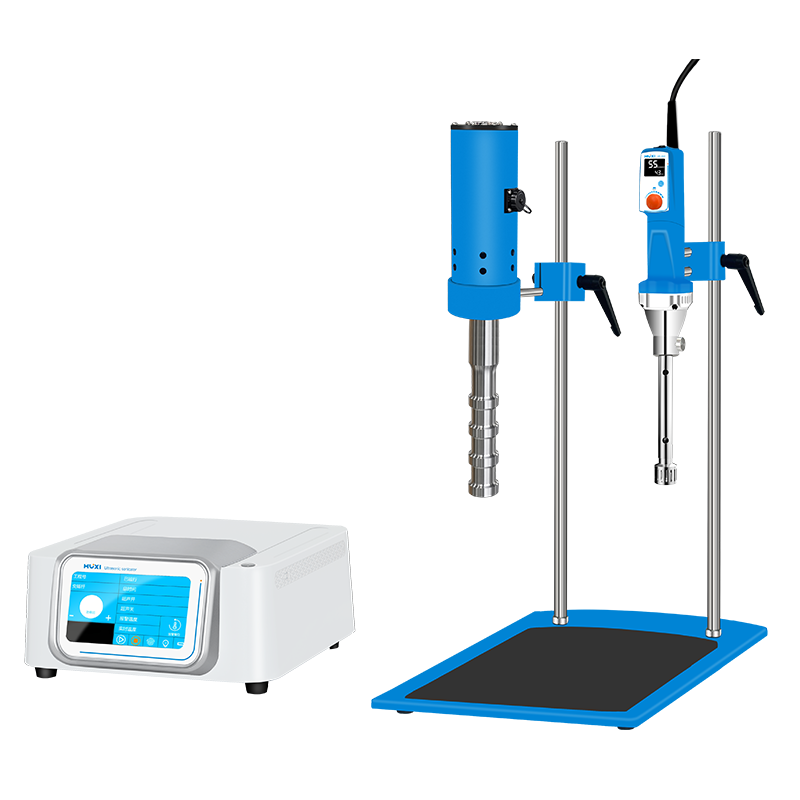
Mixers and homogenizers manage kinetic energy entirely differently. A standard mixer distributes energy evenly across the entire vessel. It creates macro-mixing flow patterns reliably. Pumping actions move the entire batch fluidly. You can process a 10,000-liter tank efficiently using this bulk method. The energy input remains relatively low per gallon.
Conversely, high-shear equipment focuses extreme energy into tiny spaces. It creates localized, high-energy zones within the fluid path. The majority of the tank volume remains relatively calm. The actual work happens entirely inside the compact processing head. The machine focuses intense kinetic energy on a very small volume of product. This happens during a fraction of a millisecond. This intense focal point explains why high-shear processing requires immense motor power.
You must evaluate equipment based on target particle sizes rigorously. Standard mixers operate strictly in the macro realm. They handle millimeter-scale blending effortlessly. They also manage large-micron suspensions quite effectively. However, they hit a hard physical limit eventually. They cannot push materials into the sub-micron range successfully.
High-shear devices push past these strict physical limitations. They operate squarely in the sub-micron and low-micron ranges. They shatter agglomerates into microscopic individual particles effectively. If your product requires strict nanoscale stability, standard agitation will always fail.
Terminology often causes severe confusion in processing industries. Terms like "emulsifier" and "homogenizer" overlap frequently in conversation. Blending refers to mixing miscible liquids or dissolving soluble solids. Emulsification involves forcing immiscible liquids to mix permanently.
Many high-shear mixers can successfully emulsify standard products. Mayonnaise and basic lotions fall into this category. However, true high-pressure systems achieve something entirely different. They are strictly required for precise, repeatable sub-micron distribution. If you need a strict nano-emulsion, a high-pressure system becomes mandatory. A standard high-shear rotor-stator might fall slightly short here.
| Feature | Industrial Mixer | Homogenizer |
|---|---|---|
| Primary Goal | Bulk fluid movement and blending | Particle size reduction and disruption |
| Energy Focus | Dispersed evenly across the tank | Localized intensely in the shear zone |
| Typical Particle Size | Millimeters to large microns | Low microns to sub-micron (nanoscale) |
| Emulsion Stability | Temporary (without chemical aids) | Highly stable, long-term |
| Shear Level | Low to medium | Extremely high |
Material flow characteristics heavily dictate your equipment choice. Viscosity plays a critical role during this evaluation. Water-like substances move easily through complex shear zones. Thick, paste-like materials pose distinct engineering challenges. Standard mixers often struggle heavily with high-viscosity emulsions. They simply carve a physical hole in the thick center. The outer edges of the material remain stagnant. You often need supplementary anchor agitators to force viscous materials toward the center. High-shear equipment also needs help moving highly viscous pastes. You must feed thick materials directly into the high-shear zone using positive displacement pumps.
You must lock down your exact processing objective before proceeding. Use the following criteria to guide your final decision.
Choose a standard mixer if your process requires:
Choose high-shear processing equipment if your process requires:
Many modern processes actually require both technologies simultaneously. You rarely rely on just one machine for complex formulations. Engineers frequently design hybrid mixing systems for advanced applications. You might use a bulk mixer to create a rough premix. This incorporates the dry powders into the liquid quickly. Once wetted, you pump the rough mixture through an inline high-shear device. The inline unit applies the intense energy needed to finalize the emulsion. This two-step process maximizes operational efficiency. It leverages the bulk moving power of the agitator alongside the precision shearing of the specialized unit.
Moving from laboratory development to full plant production introduces serious risks. Engineers often fall into the dangerous "lab-to-plant" trap. A lab-scale high speed homogenizer behaves radically differently than a production-scale unit. You cannot simply scale up based on liquid volume alone. Fluid dynamics change dramatically as tank diameters increase substantially.
You must scale processes using strict tip speed and shear rate calculations. The peripheral velocity of the rotor dictates the shear energy applied. If you ignore tip speed, your plant-scale emulsion will fail. It will likely separate within hours, despite succeeding perfectly in the lab.
Wear parts require strict, transparent evaluation during procurement. Standard mixer impellers endure very little direct physical wear. They operate at low speeds in mostly non-abrasive environments. They can run for years without requiring significant maintenance. High-shear devices operate under extreme mechanical stress constantly. Rotors, stators, high-pressure valves, and mechanical seals face continuous bombardment. They process materials at blistering fluid velocities. This velocity makes even mild particles highly abrasive over time. You must implement much stricter maintenance schedules. You risk sudden seal failure or severe metal wear if you ignore these schedules.
You must evaluate electrical power availability at your specific facility. High-shear processing demands massive electrical energy inputs. You apply significantly higher horsepower per gallon of product. A simple agitator might require five horsepower to turn a 1,000-gallon tank. Achieving sub-micron particle reduction in that same tank requires drastically more power. It might demand fifty horsepower or more. You must ensure your electrical infrastructure can handle these massive transient loads.
Food and pharmaceutical applications demand rigorous sanitary designs. Clean-in-Place (CIP) systems ensure equipment remains sterile between active batches. Mixers usually feature simple, open geometries. CIP spray balls clean standard impellers quite easily. Complex high-shear geometries complicate CIP protocols significantly. Rotor-stator gaps create severe flow restrictions internally. High-pressure valves hide intricate internal surfaces. You must engineer your CIP system to force high-velocity cleaning fluids through these restrictive zones. Failing to do so invites severe biological contamination.
The fundamental difference remains crystal clear for technical buyers. Mixers move fluid efficiently in bulk volumes. High-shear equipment tears particles apart microscopically. Over-specifying your equipment wastes critical facility resources and energy. Under-specifying your machinery severely compromises final product quality. You cannot force a low-shear agitator to create a highly stable nano-emulsion.
You must take actionable steps before acquiring any new equipment. First, gather comprehensive rheology data for your specific product mixture. Understand exactly how its viscosity shifts under physical stress. Next, define your exact target particle size strictly in microns. Finally, request a pilot test or proof-of-concept run from equipment manufacturers. Testing your actual material provides the only definitive proof of machine capability.
A: Yes, it can replace one for basic macro-emulsions and general dispersions. However, it cannot replace one for strict sub-micron or nano-emulsions. High-pressure processing is absolutely required to achieve those ultra-fine, highly stable particle distributions.
A: Standard units utilize traditional rotor-stator mechanical shear or variable gap valves. Microfluidizers use fixed-geometry microchannels. They force fluid streams to collide at extreme pressures. This intense collision creates ultra-fine nano-dispersions that traditional mechanical methods simply cannot achieve.
A: Yes, it almost certainly will. Breaking down particles heavily alters the final fluid dynamics. Your product may exhibit shear-thinning, becoming thinner under stress. Alternatively, tightly packed fine emulsions can trigger shear-thickening, increasing overall viscosity. You must test this behavior carefully.


