
+86-400-808-1508 zhaoxuemei1@huxishiye.com
Language
Please Choose Your Language

Views: 0 Author: Site Editor Publish Time: 2026-02-04 Origin: Site


Centrifuges are essential tools in laboratories for separating components of samples based on their density. While both microplate and standard centrifuges perform the same fundamental function, they differ in design, application, and performance. Here’s a breakdown of the key differences between a microplate centrifuge and a standard centrifuge.
Microplate Centrifuge: Specifically designed to hold microplates (typically 96-well or 384-well plates), allowing for the simultaneous centrifugation of multiple small samples. These centrifuges are compact and often optimized for high-throughput applications, making them ideal for labs dealing with large volumes of samples in smaller formats.
Standard Centrifuge: A traditional centrifuge can accommodate various sample containers, including test tubes, falcon tubes, or larger volumes. These centrifuges are often larger in size and offer a wider range of capacity, suitable for spinning larger volumes of liquid or diverse container types.
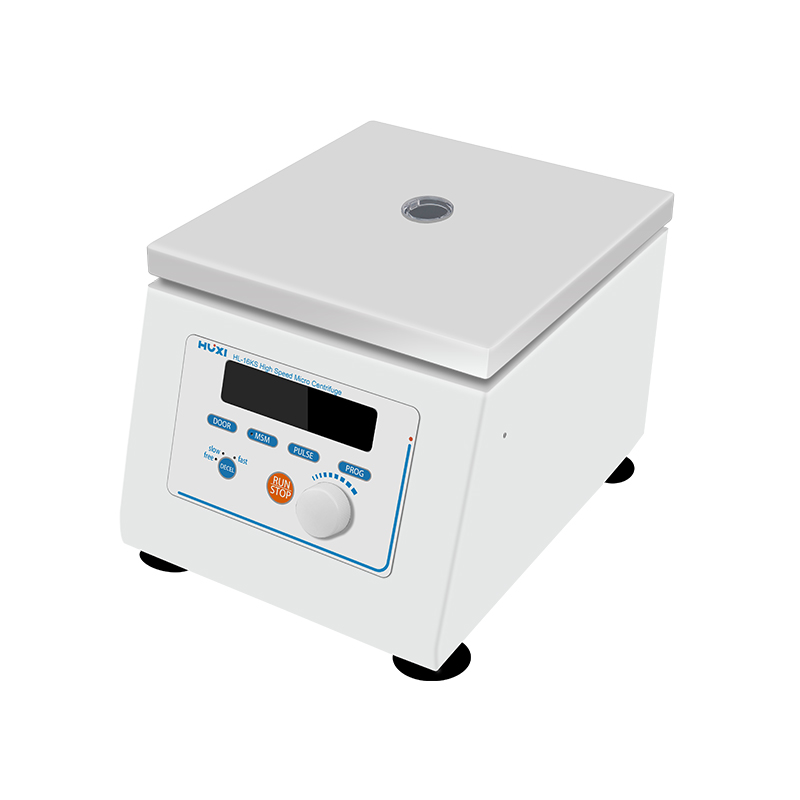
Microplate Centrifuge: Designed to spin microplates, which are flat plates with many wells used to hold small amounts of liquid. Microplates are commonly used in high-throughput experiments where many samples need to be processed simultaneously.
Standard Centrifuge: Works with a variety of sample formats, such as test tubes or bottles, which may hold larger volumes of liquids or solid samples. Standard centrifuges can handle much larger individual samples but cannot process many small samples at once like a microplate centrifuge.
Microplate Centrifuge: Typically operates at higher speeds and is designed for faster, high-throughput processing. Microplate centrifuges are ideal for laboratories needing to process multiple small samples simultaneously, such as in clinical diagnostics, molecular biology, and pharmaceutical research.
Standard Centrifuge: May operate at a variety of speeds depending on the application, ranging from low speeds for gentle centrifugation to high speeds for more intensive separation. Standard centrifuges are versatile in terms of sample volume and speed but generally lack the specialized capacity for high-throughput microplate processing.
Microplate Centrifuge: Commonly used in high-throughput applications where sample volumes are small, such as DNA extraction, protein purification, or clinical diagnostics. Microplate centrifuges are essential when labs need to process many samples simultaneously in a standardized format.
Standard Centrifuge: Used for more general laboratory applications, including larger volume sample separation (e.g., blood samples, large proteins, cell pellets), and is suitable for a variety of tasks across different fields, including chemistry, biology, and medicine.
Microplate Centrifuge: More compact and space-efficient, making it suitable for labs with limited bench space. It is designed specifically for smaller workloads involving microplates.
Standard Centrifuge: Generally larger in size, as it accommodates a range of sample containers and volumes. These centrifuges are bulkier and require more bench space.
The main differences between microplate and standard centrifuges come down to the size, capacity, and application. Microplate centrifuges are ideal for high-throughput, small sample volume processing, especially in molecular biology and diagnostics, while standard centrifuges are more versatile and can handle a variety of sample types and volumes. Choosing the right centrifuge depends on your lab’s specific needs—whether you prioritize processing many small samples or handling larger, diverse sample volumes.


