
+86-400-808-1508 zhaoxuemei1@huxishiye.com
Language
Please Choose Your Language

Views: 0 Author: Site Editor Publish Time: 2026-08-07 Origin: Site


Agitation remains a critical, yet frequently under-optimized, variable in solid-phase assays. Inadequate mixing directly compromises assay sensitivity, reproducibility, and diagnostic accuracy. In high-throughput clinical and research laboratories, inconsistent well-to-well mixing leads to edge effects, false positives, false negatives, and costly reagent waste. These issues threaten regulatory compliance and operational efficiency across the board. Selecting the appropriate equipment requires moving beyond basic RPM specifications. Lab managers must evaluate orbit mechanics, thermal uniformity, fluid dynamics, and automation readiness. This guide provides an evidence-oriented evaluation framework for shortlisting solutions tailored to strict ELISA and diagnostic protocols. We focus on the physical mechanics of fluid agitation and thermal transfer to ensure your assays perform reliably under rigorous daily use.
Orbit and Speed Dictate Efficacy: A 1.5–3.0 mm orbit is generally required for standard 96-well plate formats to achieve proper vortexing without splashing, whereas deep-well or 384-well plates demand distinct orbital configurations to overcome capillary forces.
Thermal Precision is Non-Negotiable: For enzymatic reactions in ELISA, a heating shaker with strict temperature uniformity (±0.1°C to ±0.5°C) and heated lids is required to prevent condensation and kinetic variations across the plate.
Biohazard Mitigation and Durability: Diagnostics equipment must feature high IP (Ingress Protection) ratings and chemical resistance to withstand aggressive decontamination protocols (e.g., 70% ethanol, 10% bleach, or hydrogen peroxide vapor).
Automation Dictates Form Factor: Integration with robotic liquid handlers requires specific deck-mountable footprints, precise zero-position stopping, active clamping mechanisms, and robust API/SiLA compatibility.
Target molecules must physically interact with capture antibodies bound to the solid-phase well surface. Insufficient boundary-layer mixing limits collision frequency and slows assay kinetics. When fluids remain stagnant, the reaction relies entirely on passive diffusion. This stagnant incubation increases reaction time, reduces overall optical density signals, and leads to poorly defined signal-to-noise ratios. A dedicated Microplate Shaker introduces kinetic energy to break this boundary layer. Suspension microplate assays, such as magnetic bead-based multiplex assays, require continuous kinetic energy. This keeps dense microparticles in uniform suspension without shearing bound analytes. You must maintain a delicate balance between aggressive mixing and protecting fragile molecular complexes.
In solid-phase assays, the surface area to volume ratio dictates reaction efficiency. When you agitate the microplate, you force the fluid to move across the coated bottom and lower walls of the well. This continuous movement ensures that depleted reagents near the binding sites are rapidly replaced by fresh molecules from the bulk fluid. Without this mechanical assistance, the localized depletion of analytes creates a concentration gradient that stalls the reaction. Proper agitation flattens this gradient, ensuring that the reaction rate is limited only by the intrinsic binding affinity of the antibodies, rather than by mass transfer limitations.
Surface tension, fluid viscosity, and well wall geometry affect fluid movement differently depending on the plate architecture. A standard 96 well plate shaker must generate a specific type of fluid motion. Proper toroidal vortex mixing is essential. In this state, the fluid travels up the walls of the well and folds back down the center, creating a continuous loop of homogenization. In contrast, solid-body rotation occurs when the fluid spins as a cohesive plug without internal mixing. This results in poor assay kinetics and unreliable data. Deep-well plates and 384-well formats present higher capillary forces, requiring tighter orbits and higher speeds to break the surface tension and initiate the vortex.
Plate Format | Typical Well Volume | Optimal Orbit Diameter | Recommended Speed Range | Primary Fluid Dynamic Challenge |
|---|---|---|---|---|
96-Well Standard | 300-400 µL | 1.5 mm - 3.0 mm | 500 - 1200 RPM | Balancing vortex formation with spill prevention. |
384-Well Standard | 40-120 µL | 1.0 mm - 2.0 mm | 1000 - 2000 RPM | Overcoming high capillary forces and surface tension. |
96-Well Deep Well | 1.0 - 2.0 mL | 3.0 mm - 5.0 mm | 300 - 800 RPM | Moving large fluid masses without inducing harmonic resonance. |
Achieving a Coefficient of Variation of less than 5% across all wells on a single plate is a baseline requirement for reproducibility. In clinical diagnostics, pushing this below 3% is often necessary. Aligning shaker capacity with daily sample volumes ensures throughput and scalability. You must evaluate whether a single-plate unit, a four-plate configuration, or a high-capacity tower system fits your workflow. The capability to lock protocols eliminates operator-to-operator variability. By locking time, speed, ramping, and temperature profiles, you ensure standardization and traceability across different shifts and different laboratory technicians.
Traceability extends beyond simple protocol locking. Modern laboratory environments require detailed run logs that capture the exact parameters executed during each assay. If a run fails quality control checks, technicians must be able to review the agitation and temperature logs to rule out equipment malfunction. This level of operational success requires equipment that not only performs the physical task of mixing but also integrates seamlessly into the laboratory's broader quality management system.
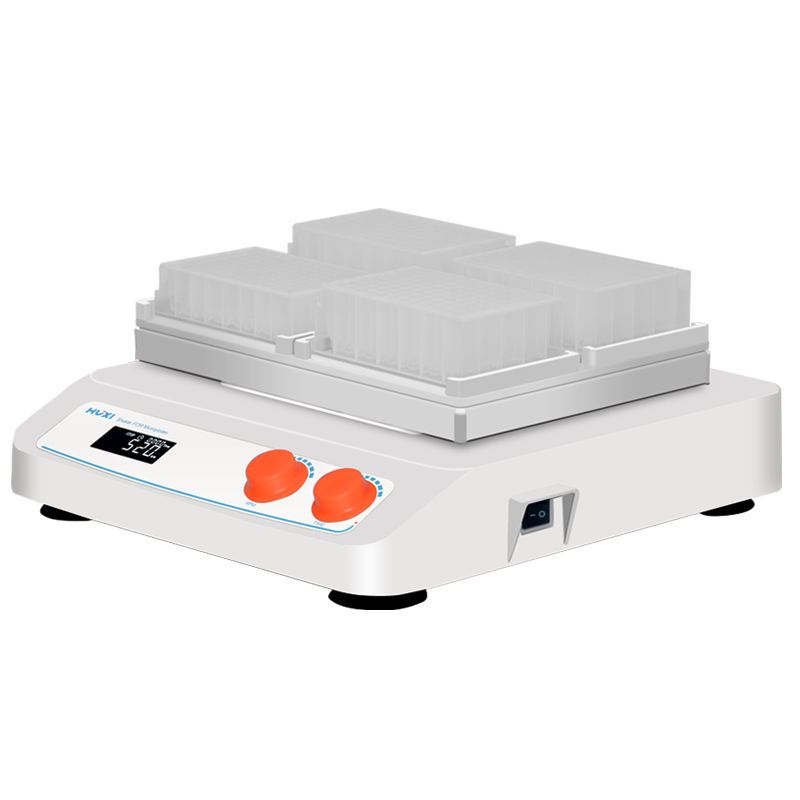
These units handle room-temperature steps, washing phases, non-temperature-sensitive assay protocols, and ambient sample resuspension. They provide reliable mechanical agitation without the complexity of thermal control systems. However, they lack environmental control entirely. Ambient laboratory temperature fluctuations directly compromise kinetic consistency. If your lab experiences significant temperature swings between morning and afternoon shifts, assays run on an ambient plate shaker will exhibit variable reaction rates, leading to inconsistent optical density readings.
Despite their limitations, ambient shakers remain a staple in many workflows due to their simplicity and ruggedness. They are ideal for aggressive washing steps where high-speed agitation is required to dislodge unbound proteins or cellular debris. When deploying ambient shakers, laboratories must strictly monitor room temperature and place the units away from HVAC vents, direct sunlight, or heat-generating equipment like centrifuges and ovens.
A dedicated heating shaker is essential for ELISA blocking, primary and secondary antibody incubation, and controlled enzymatic substrate development. These units utilize solid thermal blocks, infrared heating, or forced convection air currents to maintain highly uniform, elevated temperatures. Peltier-cooled units extend the thermal range for assays requiring below-ambient temperatures, such as 4°C to 15°C for delicate protein stability or enzymatic stops. The integration of heating and shaking into a single footprint reduces plate handling and minimizes the time plates spend outside of controlled environments.
Verify the thermal block material; gold-plated copper or high-grade aluminum offers superior heat transfer.
Check the ramp rate to ensure the unit reaches the target temperature quickly after a cold plate is loaded.
Confirm the presence of a heated lid to prevent condensation during long incubations.
Test the temperature uniformity across the block using a calibrated multi-channel thermocouple system.
Standalone benchtop units serve manual workflows, prioritizing intuitive user interfaces and flexible block-swapping. Technicians interact directly with the control panel to set parameters. Deck-integratable shakers are engineered specifically for robotic liquid handling platforms. They feature flat profiles, active mechanical plate-clamping, absolute zero-position self-centering, and direct digital commands. When a robotic gripper transfers a plate, the shaker must stop in the exact same sub-millimeter position every single time. Failure to do so results in crashed pipettes, spilled reagents, and aborted runs.
The choice between automated and standalone systems dictates the physical architecture of the equipment. Automated units often lack physical buttons or displays, relying entirely on software commands from the master liquid handler. They must also manage cable routing and heat dissipation in highly constrained spaces on the robotic deck. Standalone units, conversely, must prioritize ergonomics, easy-to-read displays, and robust physical housings that can withstand manual loading and unloading.
A 96-well plate typically utilizes a 1.5 mm to 3.0 mm orbit. Larger orbits, common in a general-purpose laboratory shaker designed for flasks, fail to generate a vortex in micro-wells. Instead, they cause catastrophic cross-well spilling. Operating within specific RPM ranges maintains mixing energy without inducing splashing or capillary-driven cross-contamination. You must match the orbit diameter to the well geometry. A 3 mm orbit at 1000 RPM will throw fluid out of a 384-well plate, while a 1 mm orbit at 1000 RPM will barely move the fluid in a deep-well block.
The relationship between orbit and speed is non-linear. As speed increases, the centrifugal forces acting on the fluid increase exponentially. The shape of the well—whether flat-bottom, U-bottom, or V-bottom—also heavily influences how the fluid responds to these forces. Flat-bottom plates, standard in ELISA, require precise speed control to ensure the fluid climbs the walls evenly without breaking the surface tension at the top of the well.
Dual-zone heating mechanisms evaluate bottom-only heating blocks versus dual-system heating. Heated lids prevent evaporation and condensation on microplate adhesive seals or lids. Condensation alters reagent concentration and distorts optical readouts by changing the path length of the fluid. Key specifications include time-to-temperature, recovery time after lid openings, and true well-to-well temperature uniformity. A uniformity spec of ±0.3°C is standard for high-quality diagnostic equipment.
Heating Mechanism | Advantages | Disadvantages | Best Use Case |
|---|---|---|---|
Bottom Block Only | Simple design, lower cost, fast ramp times. | High risk of condensation on plate lids. | Short incubations, non-volatile reagents. |
Dual-Zone (Block + Lid) | Prevents condensation, excellent uniformity. | Higher cost, more complex mechanical design. | Long incubations, PCR, sensitive ELISA. |
Forced Air Convection | Uniform heating regardless of plate bottom shape. | Slower ramp times, potential for uneven airflow. | Mixed plate formats, high-throughput towers. |
Hardware interface protocols include RS-232, USB, LAN, or CAN bus interfaces. Compatibility with SiLA standards or proprietary robotic control suites is vital for modern lab environments. Active feedback mechanisms ensure the shaker stops at the exact coordinate required for error-free automated pipette aspiration and robotic plate transfer. Without active feedback, the motor may drift over time, leading to alignment failures. The software must also handle error reporting gracefully, alerting the master system if a plate is jammed or if the target temperature cannot be reached.
Brushless DC motors are mandatory for continuous, high-throughput clinical operations. They prevent heat dissipation into the sample and eliminate premature mechanical wear associated with brushed motors. Clinical assays run corrosive reagents and biohazardous materials. Evaluate the IP-rating and housing resistance to harsh decontaminants like sodium hypochlorite and isopropyl alcohol. The internal electronics must be sealed against fluid ingress, as accidental spills are inevitable in high-volume settings.
Availability of comprehensive IQ/OQ/PQ documentation is necessary for validation standards in regulated environments. Onboard sensors support automated calibration verification for speed and temperature, traceable to national standards. Support for 21 CFR Part 11 compliance via password protection, user level permissions, and exportable run logs ensures data integrity. You must be able to prove that a specific plate was agitated at the correct speed and temperature for the exact duration specified in the standard operating procedure.
A universal shaker offers flexible utility but often compromises the precision orbit and optimal thermal coupling of a dedicated microplate heating shaker. Universal platforms use interchangeable accessory blocks for microplates, microtubes, and conical flasks. While this saves bench space, the added mass of the universal clamping mechanism often restricts the maximum RPM and increases vibration. High-volume diagnostic facilities must prioritize dedicated units engineered specifically for microplate geometries. Academic research environments, which handle diverse sample types daily, may leverage universal platforms with specialized plate adapters to maximize their equipment budget.
When evaluating versatility, consider the thermal transfer efficiency. A dedicated microplate block is machined to perfectly match the footprint of a standard plate, ensuring maximum surface contact. Universal adapters often have air gaps or rely on secondary clamping mechanisms that degrade thermal conductivity. This leads to slower ramp times and increased edge effects during temperature-sensitive incubations.
Cross-well aerosolization or droplet transfer leads to false positives in clinical diagnostics. This occurs when the agitation speed exceeds the physical limits of the well geometry and fluid volume. Verify soft-start and soft-stop ramp controls to prevent abrupt acceleration. Implement strict standard operating procedures defining max RPM parameters matched to specific well fill-volumes and fluid viscosities. Never run a plate at maximum speed without first validating the fluid dynamics with a blank buffer solution.
Outer wells incubate faster or slower than inner wells, resulting in skewed gradient signals and invalidating the plate run. This is the dreaded edge effect. Insist on high-conductivity material thermoblocks and utilize flat-bottomed microplates that maximize physical surface contact with the heating block. Ensure the laboratory environment is free from drafts, as cold air blowing across the top of a plate will rapidly cool the outer wells, even if the bottom block is perfectly uniform.
Physical shifting of the instrument across benchtops at high speeds transmits harmonic vibrations to adjacent high-precision equipment. This can disrupt analytical balances or microplate readers. Evaluate the physical mass, counter-balance construction, and anti-slip vibration-damping feet of the unit. Isolate high-speed shakers on dedicated heavy-duty balance tables when necessary. Regularly inspect the rubber feet for wear, as degraded dampeners will quickly lead to instrument walking.
Selecting the right agitation equipment dictates the success of your diagnostic workflows. Assess your specific assay requirements, focusing heavily on orbit diameter and thermal uniformity to prevent edge effects. Evaluate your automation needs early in the procurement process to ensure seamless integration with existing robotic liquid handlers. Prioritize brushless motor durability and chemical resistance to withstand rigorous daily use and aggressive decontamination protocols. Finally, lock down your standard operating procedures to match the specific fluid dynamics of your chosen plate formats.
A: A 1.5 mm to 3.0 mm orbit is generally optimal for standard 96-well plates. This tight orbit allows the fluid to form a proper toroidal vortex at high speeds without splashing over the well walls or causing cross-contamination.
A: Strict temperature uniformity prevents kinetic variations across the plate. If outer wells are cooler than inner wells, enzymatic reaction rates will differ, leading to edge effects and invalidating the assay results.
A: Heated lids maintain a temperature slightly higher than the fluid in the wells. This prevents water vapor from condensing on the underside of the plate seal, which would otherwise alter reagent concentrations and distort optical readings.
A: Brushless DC motors operate without physical brushes, eliminating friction and mechanical wear. They generate significantly less heat, run quieter, and provide the extreme reliability required for continuous, 24/7 high-throughput clinical operations.
A: Utilize equipment with soft-start and soft-stop ramp controls to avoid sudden jerks. Adhere to strict standard operating procedures that define maximum RPM parameters based on specific well fill-volumes and fluid viscosities.
A: It is highly discouraged. Standard flask shakers typically feature large orbits (10-25 mm) that fail to generate a vortex in small micro-wells. They will simply slosh the fluid back and forth, leading to poor mixing and high spill risks.


