
+86-182-1720-1300 zhaoxuemei1@huxishiye.com
Language
Please Choose Your Language

Views: 0 Author: Site Editor Publish Time: 2026-08-18 Origin: Site


Stir bar size directly controls fluid dynamics, shear rates, and thermal distribution within a mixed solution. Minor variations in these mixing dynamics often go overlooked in daily lab routines. However, a mismatch between stir bar size and laboratory equipment fundamentally alters reaction outcomes and nanoparticle synthesis. Proper sizing ensures rapid homogenization and stable vortex formation without introducing destructive physical forces.
Poor mixing efficiency carries heavy operational costs. Mismatched components lead to frequent decoupling, commonly known as spinout. They cause inconsistent heat distribution across the vessel base and introduce unwanted aeration into sensitive samples. These issues create severe batch-to-batch variability when scaling from micro-scale vials to larger production volumes. Manual mixing attempts to bypass these equipment failures but introduces inconsistent aeration, air bubble entrapment, and high contamination risks. A properly sized magnetic setup eliminates these manual agitation risks entirely.
Efficient mixing requires specific physical conditions inside the vessel. Success means achieving rapid homogenization and maintaining a stable vortex. It requires the complete absence of dead zones near the vessel walls. You must prevent unwanted air bubbles from pulling into the fluid. Consistent shear forces must distribute evenly throughout the solution. Meeting these criteria depends entirely on the physical interaction between the internal drive mechanism and the external stir bar.
The magnetic coupling mechanism dictates performance. A motor inside the unit spins a drive magnet. Modern units often use stepper motors for precise speed control, while older units rely on brushed motors. Regardless of the motor type, this drive magnet projects a magnetic field upward through the chassis and the vessel base. The stir bar catches this magnetic flux and rotates in tandem. For this coupling to hold, the stir bar length must closely match the drive magnet length. The poles of the internal magnet must align directly with the poles of the stir bar. When you place a Magnetic Stirrer on the bench, you rely on this invisible flux to transfer motor torque into fluid motion. Magnetic flux density drops off rapidly according to the inverse square law. If the distance between the drive magnet and the bar increases due to thick glass, the coupling weakens significantly.
Physics explains why mismatched lengths fail. If a stir bar is significantly longer than the drive magnet, the magnetic flux lines cannot reach the outer edges of the bar. The outer poles lack magnetic grip. This weak coupling causes erratic spinning and immediate spinout at higher speeds. Conversely, if the stir bar is too short, the internal magnet's poles pull the bar away from the center. The bar dead-centers on one pole of the drive magnet, vibrating uselessly instead of rotating.
Vortex formation relies on specific fluid dynamics generated by the bar's dimensions. The length and diameter of the stir bar dictate the depth and stability of the vortex. As the bar spins, it pushes fluid outward toward the vessel walls. This creates radial flow. The fluid hits the walls, travels upward, and then pulls back down through the center. This creates axial flow. A properly sized bar balances radial and axial flow, creating a deep, stable vortex that pulls surface materials down into the active mixing zone. If the bar is too thin, it slices through the liquid without moving it. If it is too thick, it displaces too much volume and causes splashing.
Reaction-specific dynamics change based on the solution type. Homogeneous solutions require gentle, consistent axial flow to blend miscible liquids. Heterogeneous or multiphase reactions require aggressive shear forces. The stir bar must break up droplets or suspend solid particles evenly. In these cases, specific stir bar shapes and sizes maintain proper phase distribution and guarantee reaction uniformity. For example, dissolving heavy salts into an aqueous solution requires a bar that sweeps the very bottom of the flask to prevent the solute from settling.
Stir Bar Selection Guide Based on Vessel Geometry
Vessel Type | Recommended Shape | Ideal Length Ratio | Primary Application |
|---|---|---|---|
Standard Beaker | Cylindrical / Octagonal | 30% - 50% of base diameter | General mixing, titrations |
Erlenmeyer Flask | Octagonal with Pivot Ring | 30% - 40% of base diameter | High-speed agitation, preventing wall contact |
Round-Bottom Flask | Oval / Egg-Shaped | Matched to bottom curvature | Synthesis, distillation, reflux reactions |
Test Tube / Vial | Micro / Flea | 50% - 70% of base diameter | Micro-scale synthesis, biological sampling |
Large Carboy (5L+) | Cross / Star | 20% - 30% of base diameter | Bulk media preparation, heavy suspensions |
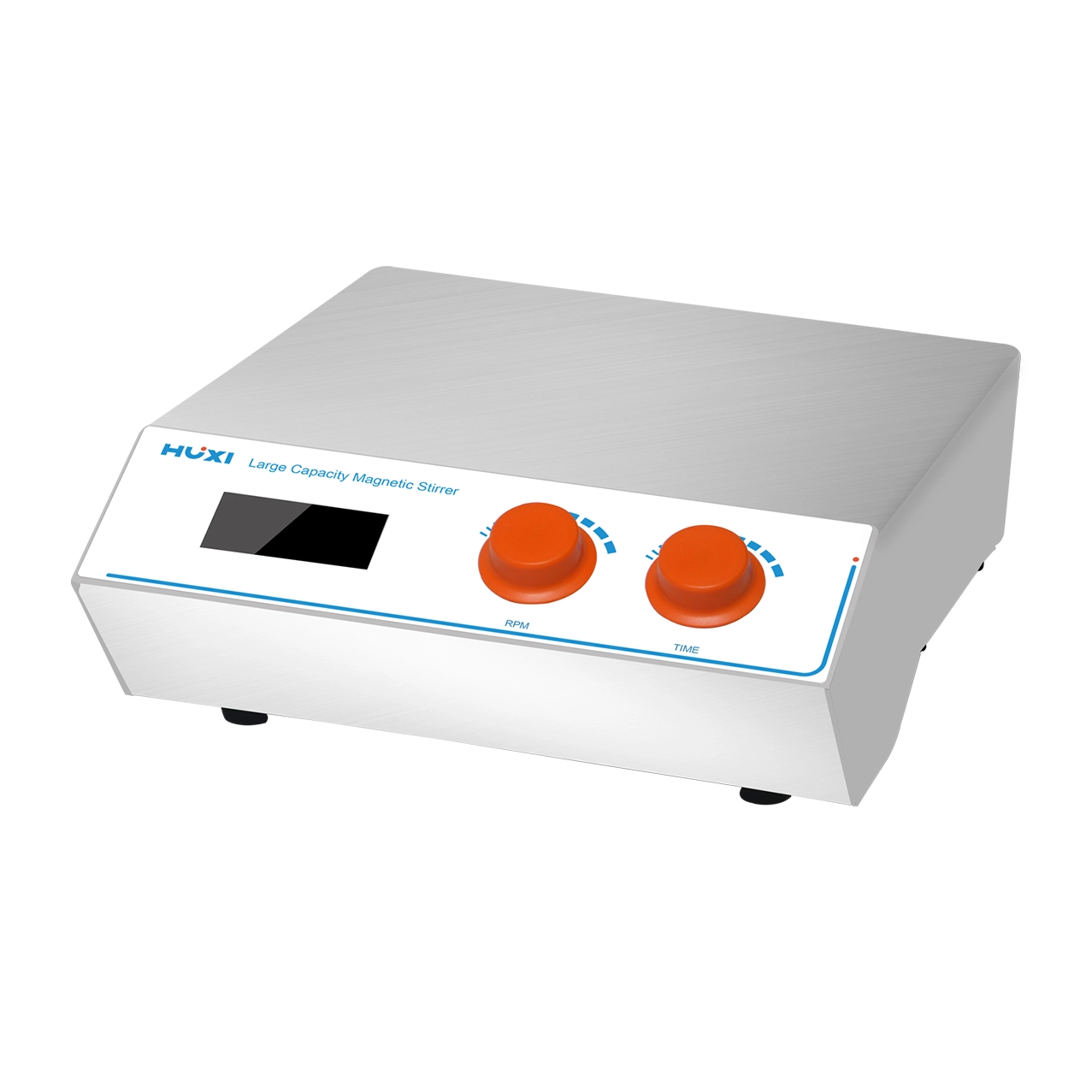
Selecting the right equipment involves balancing conceptual trade-offs. You must balance the necessary torque requirements against the risks of aeration, sample degradation, and inconsistent yields. Fluid properties heavily influence these variables.
Low and high viscosity solutions demand entirely different approaches. Aqueous solutions possess low resistance. They require smaller, smoother bars. A standard cylindrical bar easily generates a vortex in water without decoupling. Viscous polymers, heavy oils, or dense slurries require massive torque. Glycerin, for example, has a viscosity roughly one thousand times that of water at room temperature. These fluids demand larger, wider bars. Octagonal or cross-shaped bars provide higher surface area. The sharp edges displace dense fluids effectively, generating movement where a smooth bar would simply slip and spin out. When working with fluids above 500 centipoise, standard cylindrical bars fail completely. You must switch to a high-surface-area geometry to maintain any semblance of fluid movement.
Heat transfer dynamics change significantly when using a hot plate magnetic stirrer. Stir bar size impacts thermal homogeneity across the fluid volume. Exothermic reactions and high-temperature boils require rapid heat dissipation. Larger bars sweep more surface area at the bottom of the vessel. This continuous sweeping motion prevents localized hot spots. It stops boiling delays and prevents thermal degradation of sensitive reagents resting at the bottom of the flask. If you use a tiny bar on a large heated surface, the fluid at the edges will boil while the center remains cool.
Managing sensitive suspensions requires precise shear control. Biological samples, such as cell cultures, suffer under high shear stress. An oversized bar spinning rapidly causes cell lysis, destroying the sample. You must use a smaller, smooth bar at low speeds to maintain suspension without rupturing cell walls.
Nanoparticle synthesis relies entirely on consistent shear rates. Stir bar size directly controls nanoparticle size distribution during synthesis. The physical force of the vortex dictates how particles form and aggregate. Incorrect scaling alters these shear rates. If you up-scale a reaction but use the wrong bar size, the altered fluid dynamics lead to agglomeration. The particles clump together, ruining the batch and creating inconsistent particle sizes.
Physical failures during the mixing process ruin experiments and waste expensive reagents. Troubleshooting these implementation risks requires understanding the mechanical limits of your equipment.
Decoupling, or spinout, represents the most common failure. Spinout occurs when the magnetic bond breaks, causing the bar to jump erratically. Root causes include using a bar too large for the drive magnet, applying excessive motor speed too quickly, or attempting to mix a high-viscosity fluid that overcomes the magnetic torque.
To mitigate spinout, follow this troubleshooting sequence:
Stop the motor completely and allow the fluid to settle.
Verify that the vessel is perfectly centered over the drive magnet.
Reduce the target speed by 20% and slowly ramp up the acceleration.
If spinout continues, replace the stir bar with one that is 10% shorter.
For highly viscous fluids, upgrade to a rare-earth (Samarium Cobalt) stir bar for stronger magnetic coupling.
Wear, abrasion, and contamination pose hidden risks. Oversized or overly heavy bars physically degrade against the vessel walls. The constant friction wears down the protective coating. This shedding introduces PTFE microplastic contamination directly into chemical batches. This contamination ruins analytical chemistry results, often appearing as ghost peaks in HPLC or GC-MS readouts. Routine maintenance prevents this. Perform visual inspections of your inventory. Look for scoring, discoloration, or exposed internal magnets. A bar that looks yellowed or heavily scratched has lost its non-stick properties and will harbor cross-contamination between batches. Discard compromised bars before they ruin a critical reaction.
Reproducibility issues plague multi-batch reactions. Using a laboratory magnetic stirrer requires strict standardization. Documented industry studies highlight these failures. Inconsistent stir bar sizing across identical reactions causes statistically significant variations. Yields drop. Reaction times lengthen. Overall reproducibility vanishes simply because technicians used differently sized bars for the same chemical process. You must document the exact bar dimensions in your standard operating procedures to prevent this drift.
Equipment variations dictate specific stir bar parameters. You cannot treat all stirring platforms identically. The internal architecture of the unit determines the maximum allowable bar size.
Standard agitation applications often rely on a non heating magnetic stirrer. These units handle titrations, buffer preparations, and general mixing. Standardizing stir bar sizes across dedicated units ensures baseline consistency. If a lab uses identical units for daily tasks, assigning a specific bar size to each unit eliminates guesswork and prevents accidental decoupling. The drive magnets in these units are typically optimized for standard 1-inch or 2-inch bars.
Complex setups introduce unique constraints. A multi position magnetic stirrer operates multiple drive magnets in close proximity. This creates a high risk of cross-talk between adjacent magnetic fields. Strict adherence to maximum stir bar length is critical here. The maximum length for multi-position units is often much smaller than single-position units. If you use oversized bars, the magnetic field from one position will grab the bar in the adjacent position. The bars will interfere with one another's rotation, causing simultaneous spinouts across the entire platform. You must measure the distance between the stirring positions and ensure your bar length does not exceed the manufacturer's recommended limit for that specific grid spacing. For a standard 15-position grid, a 15mm or 20mm bar is often the absolute maximum allowable size before cross-talk destroys the mixing process.
Stir bar size acts as a foundational variable in fluid dynamics, thermal distribution, and experimental reproducibility. Ignoring the geometric relationship between the bar, the vessel, and the drive magnet guarantees inconsistent results and equipment wear. The evaluation framework requires four distinct measurements. First, measure the internal drive magnet of your equipment. Second, measure the internal base diameter of your vessel. Third, account for the fluid viscosity and specific reaction type. Finally, select the corresponding length and shape that satisfies all three constraints.
To secure reliable laboratory outcomes, take the following actions:
Audit your current stir bar inventory and categorize them by length, shape, and magnetic strength.
Discard heavily degraded, scratched, or demagnetized bars immediately to prevent chemical contamination.
Standardize specific bar sizes for your primary vessel geometries and document this in your standard operating procedures.
Calibrate acceleration protocols for viscous fluids to prevent routine spinouts during scale-up.


