
+86-400-808-1508 zhaoxuemei1@huxishiye.com
Language
Please Choose Your Language

Views: 0 Author: Site Editor Publish Time: 2026-01-26 Origin: Site


Vortex mixers are commonly used in laboratory settings for efficient and consistent mixing of liquids. These machines provide rapid and uniform mixing by creating a vortex in the liquid, making them essential tools in scientific research, diagnostics, and various testing environments. Below, we’ll explore how a vortex mixer can significantly improve your lab’s efficiency.
A vortex mixer works by rapidly shaking or swirling a sample in a test tube or other container. This motion creates a vortex, which draws the liquid into the center, ensuring even mixing throughout the sample. The primary purpose of the vortex mixer is to efficiently blend small volumes of liquids or suspensions, making it ideal for applications requiring thorough mixing without the risk of sample contamination or cross-contamination.
In scientific research, a vortex mixer is typically used to resuspend samples, mix reagents, or prepare solutions before further analysis. Its precise control over mixing speeds makes it an invaluable tool for researchers and laboratory technicians.
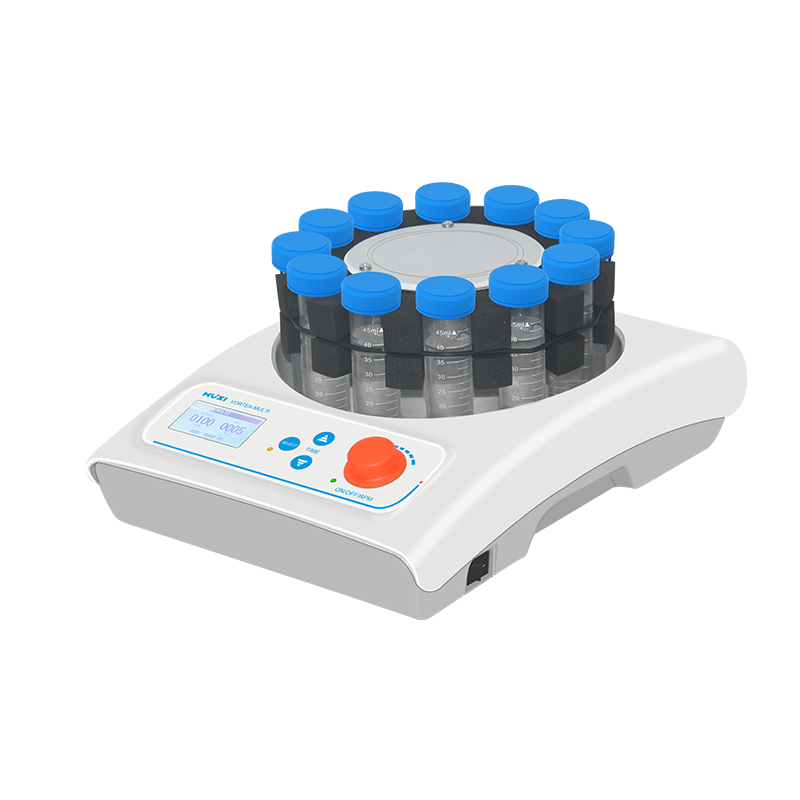
One of the main advantages of vortex mixers is their ability to achieve rapid, high-efficiency mixing. Vortex mixers can operate at varying speeds, depending on the model and the nature of the sample. This ability to adjust the speed allows users to fine-tune the mixing process for different materials, from gentle mixing for delicate liquids to more aggressive agitation for thicker suspensions.
Because vortex mixers work at higher speeds, they save valuable time in the laboratory, leading to an overall increase in productivity. This is especially useful in time-sensitive experiments or when processing multiple samples in parallel, where consistency and speed are crucial.
Vortex mixers are versatile and find applications in many different industries and laboratory settings. In the pharmaceutical industry, they are used to mix samples before analysis, ensuring that reagents and chemicals are evenly distributed. In clinical diagnostics, vortex mixers help mix blood samples, urine samples, and other bodily fluids for testing and analysis.
In the life sciences, vortex mixers play a crucial role in DNA and RNA extraction, protein preparation, and enzyme reactions. The rapid mixing ability of vortex mixers also supports various other applications in chemical synthesis, biotechnology, and environmental testing.
Vortex mixers provide several advantages over traditional manual mixing techniques. Unlike manual shaking or stirring, vortex mixers provide a more uniform and consistent result with less effort and time. Manual mixing often leads to inconsistent mixing or can cause contamination from handling, which is eliminated with the use of a vortex mixer.
Additionally, vortex mixers reduce the risk of sample degradation or loss, particularly in sensitive experiments where the integrity of the sample must be maintained. The precise control offered by vortex mixers also helps prevent overmixing, which could result in unwanted reactions or the destruction of delicate materials.
With the ability to adjust the mixing speed and duration, vortex mixers enhance the accuracy and precision of the mixing process. This is especially critical when preparing samples for quantitative analysis, where any variation in sample concentration or composition could lead to inaccurate results. By providing uniform and reproducible mixing, vortex mixers ensure that all components are evenly distributed, allowing for more reliable results.
Moreover, vortex mixers can handle smaller volumes of liquid, making them an excellent choice for labs dealing with limited quantities of reagents or high-value samples. This precision in mixing ensures that even small amounts of material are properly prepared for testing or analysis.
Vortex mixers are a valuable addition to any laboratory, improving efficiency by enabling rapid, consistent, and precise mixing of samples. Their versatility across different applications, speed, and the ability to handle a variety of sample types make them indispensable tools for researchers and lab technicians. Whether for pharmaceutical research, clinical diagnostics, or biotechnology, the efficiency and accuracy offered by vortex mixers can help improve the overall productivity and reliability of laboratory work.


