
+86-400-808-1508 zhaoxuemei1@huxishiye.com
Language
Please Choose Your Language

Views: 0 Author: Site Editor Publish Time: 2025-10-31 Origin: Site


A homogenizer is a crucial piece of equipment used across various industries to ensure uniformity and consistency in products. It plays a significant role in breaking down particles into smaller, more consistent sizes, creating stable mixtures. This article explores the purpose of a homogenizer, its applications, and the features that make it indispensable in fields like food processing, pharmaceuticals, cosmetics, and laboratory research.
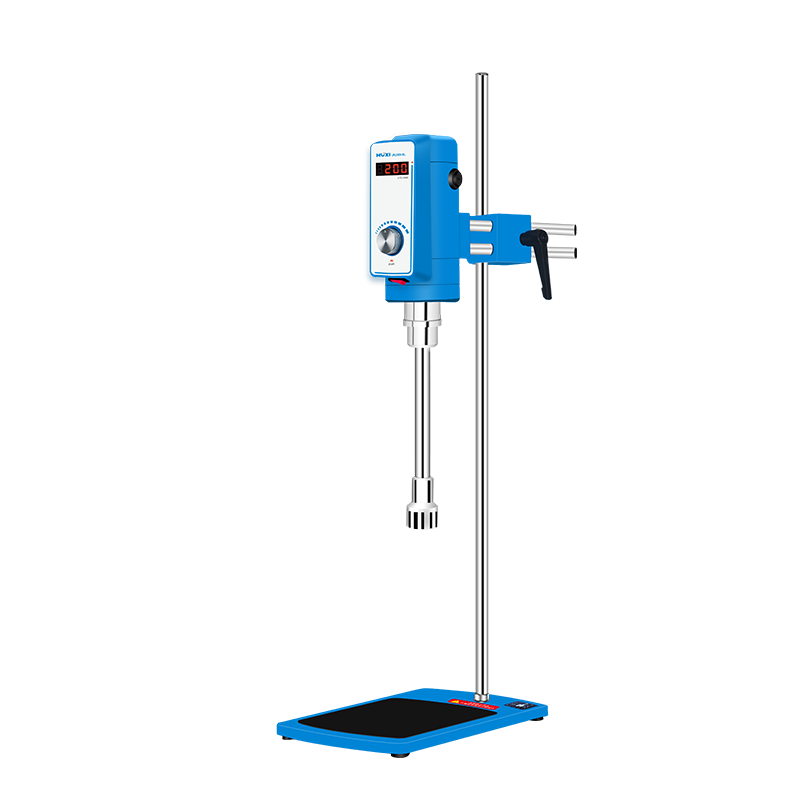
A homogenizer is designed to mix, emulsify, and disperse materials into a uniform and consistent mixture by reducing the size of particles or droplets. This process is essential for achieving stable emulsions, suspensions, and solutions, which are widely used in industries like food and beverage, pharmaceuticals, and cosmetics.
Homogenizers reduce the size of particles or droplets within a mixture. This is especially important in the pharmaceutical industry, where uniform particle sizes affect the solubility and effectiveness of drugs.
Homogenization ensures that products maintain a consistent texture and composition, which is critical in industries like food and cosmetics, where product quality depends on uniformity.
By creating uniform mixtures, homogenizers improve the stability of emulsions and suspensions. This is vital for products like creams, lotions, and pharmaceutical formulations, where separation can lead to product degradation.
In research, homogenizers prepare samples for analysis by ensuring uniform particle distribution. This is essential in applications like chromatography and spectroscopy.
Homogenizers are widely used in food production, particularly for emulsions like milk, sauces, and dressings. They break down fat globules and ensure consistent texture and taste.
In pharmaceuticals, homogenizers ensure that active ingredients are evenly distributed in liquid formulations, which is crucial for the effectiveness of medications.
Homogenizers help maintain smooth textures in cosmetic products like lotions, creams, and ointments by ensuring uniform dispersion of active ingredients.
The FJ300-SL High-Speed Dispersing Homogenizer stands out due to its design and functionality:
Speed Control: It features stepless speed control, allowing users to adjust the speed for different material requirements.
Durability: Made with high-quality stainless steel and die-cast aluminum, ensuring long-lasting performance.
User-Friendly: Easy-to-operate controls with an LED display for precise adjustments, simplifying the homogenization process.
The use of homogenizers in industries brings several benefits:
Consistency and Uniformity: Homogenizers ensure that products are consistent in texture, improving product quality and customer satisfaction.
Efficiency in Processing: They speed up processes like emulsification and dispersion, reducing processing time and costs.
Improved Product Quality: By ensuring uniform distribution of particles, homogenizers enhance the stability and physical properties of products, such as viscosity and texture.


