
+86-400-808-1508 zhaoxuemei1@huxishiye.com
Language
Please Choose Your Language

Views: 0 Author: Site Editor Publish Time: 2026-01-30 Origin: Site


Choosing the right vortex mixer is a key decision for any laboratory, as it directly affects the efficiency, accuracy, and reliability of your mixing tasks. Vortex mixers are widely used in life sciences, clinical diagnostics, research labs, and pharmaceutical settings for mixing small volumes of liquid quickly and consistently. Below, we’ll break down the essential factors to consider when selecting the best vortex mixer for your lab’s needs.
Before selecting a vortex mixer, it’s important to identify how and where it will be used. Vortex mixers are versatile tools, but different models are designed for specific tasks:
Routine mixing: For simple resuspension of cells, mixing reagents, or preparing solutions, a standard vortex mixer with adjustable speed will work well.
High-throughput workflows: If your lab processes many samples in parallel, look for models with multi-tube holders or platforms designed for microplates.
Sensitive samples: For delicate applications like working with enzymes, proteins, or live cells, choose a vortex mixer with gentle mixing modes or pulse operation to avoid excessive agitation.
Understanding your primary applications will help narrow down the choices to the most suitable equipment for your workflow.
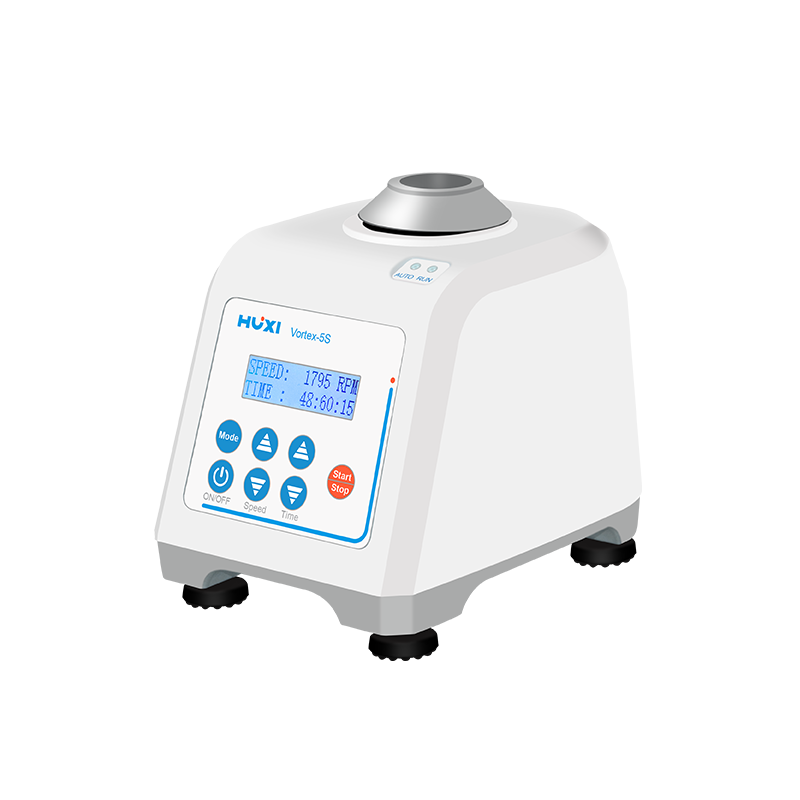
The speed range and control options of a vortex mixer directly impact its performance:
Adjustable speed: Look for mixers that offer variable speed control, typically measured in revolutions per minute (RPM). A wider speed range (e.g., from low gentle speeds to high intense mixing) provides flexibility for different sample types.
Digital versus analog control: Some models feature digital displays and precise speed settings, which make reproducibility easier between runs. Analog controls (dial-based) are simpler and often more affordable but less precise.
Having the right speed settings ensures you can effectively mix a range of liquids—from low-viscosity buffers to more viscous solutions.
Vortex mixers come with different platform designs, and choosing the right one depends on your sample format:
Single-tube platform: Ideal for occasional use or when processing individual tubes. These are compact and cost-effective.
Universal platform: Includes attachments or adapters for various tube sizes (e.g., from 0.2 mL PCR tubes to 50 mL centrifuge tubes).
Multi-place or microplate platform: Suitable for high-throughput labs that need to mix multiple samples simultaneously, including microplates.
Some mixers offer interchangeable platforms, allowing you to adapt the machine to different tube types without buying multiple units.
Vortex mixers typically operate in one of two ways:
Touch/continuous mode: The mixer runs only when pressure is applied (e.g., pressing down with a tube). This is useful for intermittent mixing tasks and saves energy.
Continuous run mode: The mixer runs constantly at a set speed until turned off. This is ideal for repetitive workflows where multiple samples require the same mixing action.
Some models provide both modes, allowing users to switch depending on the task at hand.
Durability is a vital factor, especially in busy laboratories. When choosing a vortex mixer, consider:
Robust construction: A solid base and strong motor housing reduce vibration and extend the life of the device.
Maintenance and serviceability: Look for models with easy-to-replace parts (like rubber feet or platforms) and good manufacturer support.
Warranty and support: A reliable warranty and accessible customer service can save time and money if repairs are needed.
High-quality vortex mixers typically offer longer service life and more consistent performance, which is especially important for frequent use.
Safety and user comfort should not be overlooked:
Splash guards or protective covers: These help prevent sample aerosols or spills from escaping during mixing, which is especially important with biohazardous materials.
Noise level: Quieter models improve the working environment in crowded labs. Review the specifications or test units in person if possible.
Stable grip and anti-slip feet: A stable mixer reduces the risk of tube slippage or accidental spills during operation.
Choosing a vortex mixer with good safety features helps protect both users and samples.
Selecting the best vortex mixer for your lab involves considering your specific applications, speed control, platform type, operation mode, build quality, safety features, and budget. By evaluating these key factors, you can choose a vortex mixer that enhances your laboratory efficiency, meets your workflow needs, and delivers dependable performance. With the right vortex mixer in place, your team can achieve consistent sample preparation and smoother day‑to‑day operations.


