
+86-400-808-1508 zhaoxuemei1@huxishiye.com
Language
Please Choose Your Language

Views: 0 Author: Site Editor Publish Time: 2025-11-05 Origin: Site


Homogenization is a critical process in a variety of industries, ranging from food and beverage production to pharmaceuticals and cosmetics. The principle of a homogenizer is grounded in its ability to break down materials into finer, more uniform particles or emulsions. This process is vital for ensuring consistency, stability, and quality across a range of products. In this article, we explore the underlying principle behind homogenizers, their applications, and the unique features that make them indispensable in laboratory and industrial settings.
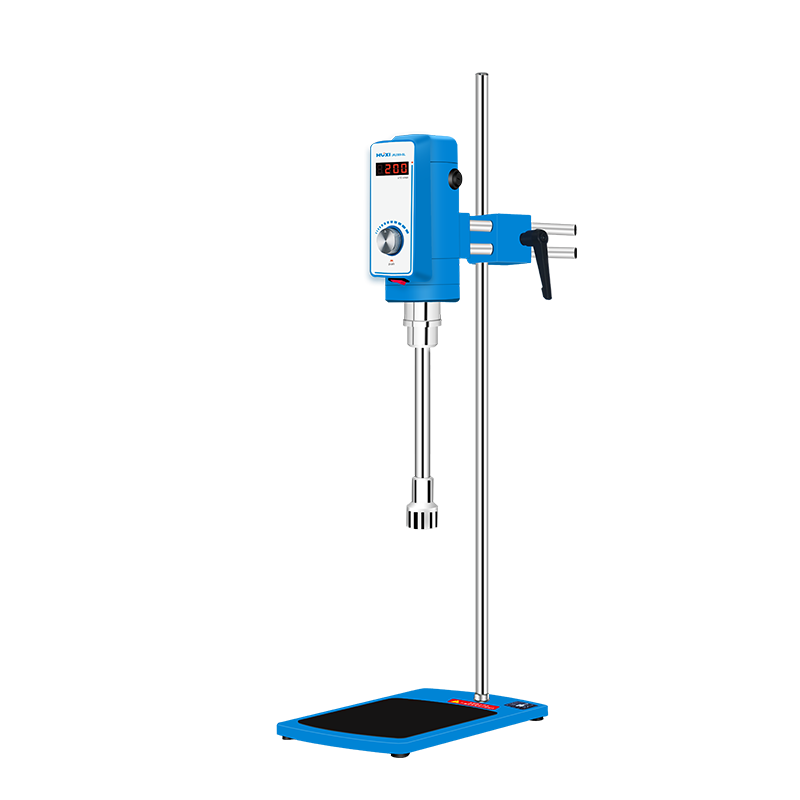
A homogenizer is a machine designed to blend, emulsify, and disperse materials into smaller, uniform particles. The primary function of a homogenizer is to ensure that the particle size of a mixture is consistent, which improves the stability and quality of the product. By reducing the size of particles, a homogenizer creates a more uniform texture, whether in suspensions, emulsions, or other mixtures.
The process of homogenization works by applying mechanical forces such as shear, cavitation, and pressure to break up larger particles and disperse them evenly throughout a liquid medium. These actions help to reduce clumping, prevent separation, and improve the overall quality of the material being processed.
Homogenization occurs through several physical processes, with shear and pressure being the most common mechanisms. The key principle behind a homogenizer's operation is the creation of intense forces that reduce particle size and ensure that the mixture remains stable over time. Let’s break down the primary steps involved:
Shear forces are generated within the homogenizer by the high-speed rotation of the rotor and the accompanying stator. These forces break up large particles by creating a difference in velocity between the two components, which causes a shear stress on the liquid. The result is the reduction in particle size and the even distribution of these particles throughout the medium.
In many homogenizers, cavitation plays a crucial role in the process. Cavitation occurs when the pressure within the liquid falls below the vapor pressure, causing the formation of tiny vapor bubbles. When these bubbles collapse, they release immense energy that further breaks down particles. This phenomenon is particularly important in achieving very fine particle sizes in emulsions and suspensions.
Homogenizers, especially laboratory-grade models, are designed to handle a wide range of materials, from simple liquid suspensions to complex emulsions. For example, the FJ300-SL homogenizer is made with high-quality stainless steel for the components in contact with materials, which not only prevents contamination but also offers resistance to corrosion, making it suitable for use with both simple and reactive substances.
Another important feature of modern homogenizers is the ability to control the speed of operation. The FJ300-SL homogenizer comes with a knob-based stepless speed control system, which enables users to adjust the rotational speed from 2000 to 15,000 rpm. This range allows for fine-tuning based on the specific requirements of the material being processed—lower speeds for delicate mixtures and higher speeds for breaking down tougher particles.
Homogenizers are essential in laboratory environments, especially when fine particle dispersion is necessary. These machines allow for the preparation of samples in a controlled manner, ensuring consistency across multiple batches. For instance, in the pharmaceutical industry, a homogenizer is often used to prepare uniform mixtures of active ingredients in a liquid medium, ensuring that each sample is identical in composition.
In small-scale production, homogenizers are used to prepare batches of emulsions or suspensions. Industries like cosmetics rely heavily on homogenizers for producing creams, lotions, and other emulsions that require fine, uniform particles to ensure stability and effectiveness. Similarly, in food processing, homogenizers are used to create consistent products, such as beverages, sauces, and soups.
The principle of a homogenizer revolves around the effective application of shear forces, cavitation, high pressure, and velocity to break down particles and ensure their uniform distribution within a liquid medium. By incorporating high-performance motors, durable materials, and user-friendly controls, modern homogenizers offer unparalleled efficiency and versatility in laboratory and industrial applications. The ability to precisely control the homogenization process allows industries to achieve consistent quality and product stability, making homogenizers an indispensable tool in fields ranging from scientific research to commercial production.


