
+86-400-808-1508 zhaoxuemei1@huxishiye.com
Language
Please Choose Your Language

Views: 0 Author: Site Editor Publish Time: 2025-11-04 Origin: Site


When it comes to laboratory equipment, mixers and homogenizers are two commonly used devices, but they serve different purposes. Understanding their distinct functions, design, and applications can help users select the right tool for their needs. This article will explore the differences between mixers and homogenizers, their features, and when to use each type of equipment.
A mixer is a device used to blend or combine materials into a uniform mixture. Typically, mixers are used in laboratory and industrial settings to stir or mix various substances, whether solid, liquid, or a combination of both. Mixers vary in size and type, from small handheld versions to large industrial models. The main goal of a mixer is to facilitate uniform blending of materials without necessarily breaking down the substances involved.
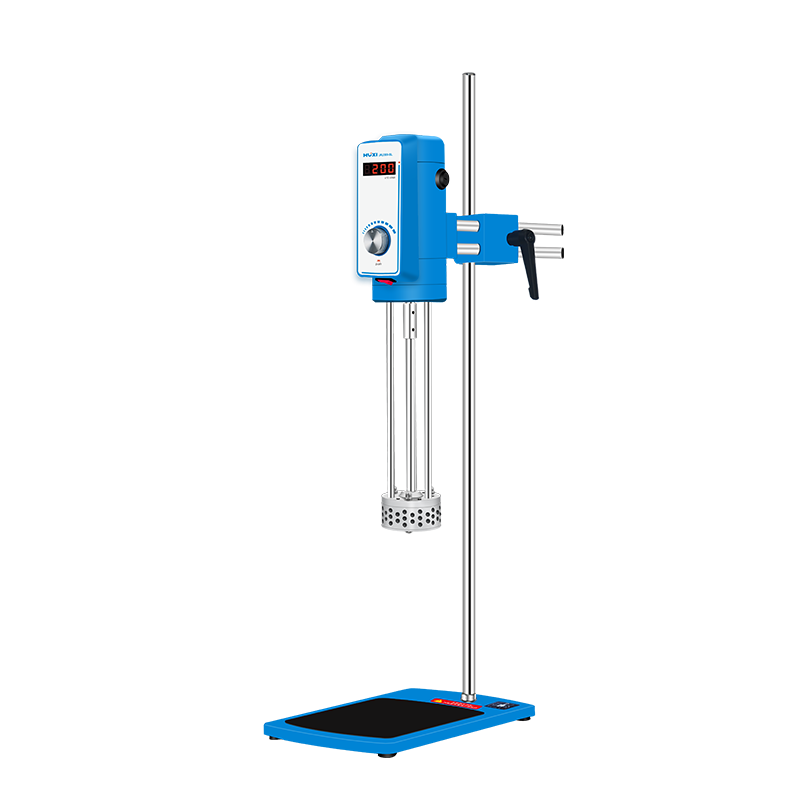
Vortex Mixers: These are commonly used for small sample sizes and create a vortex in the liquid.
Magnetic Stirrers: Magnetic stirrers use a rotating magnetic field to mix liquids, ideal for constant stirring.
Shakers: Shakers are used to agitate containers, typically for mixing liquids or suspensions.
Chemistry and Biology: For mixing chemicals or reagents.
Pharmaceuticals: In preparation of solutions or suspensions.
Cosmetics: Mixing creams, lotions, and emulsions.
Mixers typically operate at moderate speeds and are ideal for applications where particle dispersion is not a critical factor.
A homogenizer is a specialized device designed to create a uniform mixture by breaking down particles into smaller sizes. This equipment is ideal for creating emulsions, suspensions, or pastes where the goal is to achieve a consistent particle size throughout the mixture. Homogenizers are typically used in more advanced applications where particle size uniformity is crucial for the final product’s quality.
High Shear Homogenizers: These are powerful tools that create uniform dispersion by shearing the material under high pressure. Commonly used for emulsifying, homogenizing, and dispersing particles in liquids.
Ultrasonic Homogenizers: Utilize high-frequency sound waves to break down particles into nanoscale sizes, commonly used in lab environments for biological and chemical samples.
Pressure Homogenizers: These devices use high-pressure systems to force materials through small nozzles, achieving very fine particle sizes.
Food Processing: Creating smooth emulsions for sauces, beverages, and dairy products.
Pharmaceuticals: Ensuring uniformity in formulations like creams and ointments.
Cosmetics: Producing smooth emulsions for lotions and creams.
Laboratory Research: Homogenizing biological samples to ensure consistency before analysis.
Homogenizers typically operate at much higher speeds and pressures compared to mixers, allowing them to break down and disperse particles to a much finer level.
| Feature | Mixer | Homogenizer |
|---|---|---|
| Purpose | To combine materials into a uniform mixture | To break down and disperse particles into a consistent size |
| Speed | Moderate | High |
| Particle Size | Does not significantly affect particle size | Reduces particle size to a fine consistency |
| Applications | General mixing, not focused on particle uniformity | Creating emulsions, suspensions, or homogenized mixtures with fine particles |
| Type of Motion | Stirring, shaking, or vortexing | High shear, pressure, or ultrasonic forces |
| Example | Magnetic stirrers, vortex mixers | High shear homogenizers, ultrasonic homogenizers |
Both mixers and homogenizers serve essential roles in various industries and laboratory settings, but understanding their differences can guide users to the right tool for the job. Mixers are best for general blending, while homogenizers are critical for applications where particle size uniformity and dispersion are necessary. By assessing your specific needs, you can choose the right equipment to optimize your processes and achieve the desired results.


